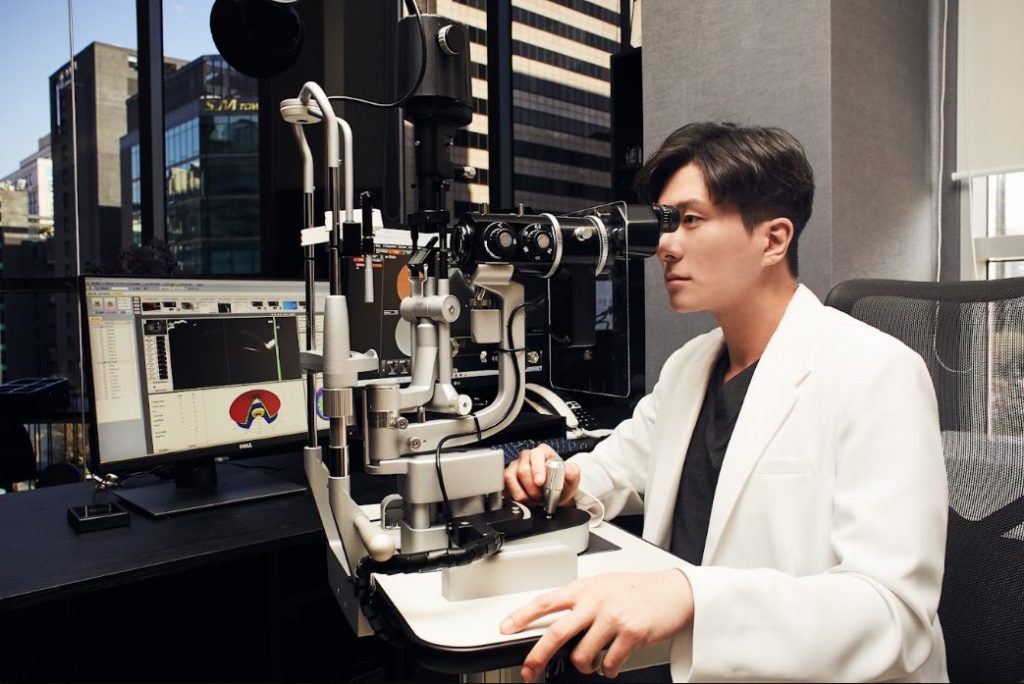
SILK laser eye surgery in Korea at St. Mary’s Jin Eye Center uses the 7th-generation J&J ELITA femtosecond laser to remove a thin lens-shaped piece of tissue (lenticule) through a 2–4 mm incision. If the eye exam shows you are eligible, the exam and surgery can be done on the same day, and most patients return to light daily activities the day after surgery, after a check-up.
Medically reviewed by Dr. Park JinHeung, Director, St. Mary’s Jin Eye Center (Ophthalmologist, PhD; Adjunct Professor, Seoul St. Mary’s Hospital) · Last updated 2026-10-16
“1DAY SMILE” is the name of our SILK program, not a separate operation. SILK (Smooth Incision Lenticular Keratomileusis) is performed with the J&J ELITA laser; ZEISS SMILE works on the same lenticule-extraction principle but uses a different laser platform, so the two names are not interchangeable. “Next day” describes when most people go back to light daily activities — it does not mean that vision is fully stable on day one. This guide answers what international patients ask most: what SILK is, how fast vision recovers, who is a good candidate, how many days to stay in Seoul, the cost and the risks.
What is SILK laser eye surgery, and how is it different from SMILE?
SILK corrects myopia (short-sightedness) and astigmatism without creating a corneal flap. The laser shapes a thin lenticule inside the cornea, and the surgeon removes it through a small incision, which changes the cornea’s focusing power. LASIK lifts a flap, and surface procedures such as TransPRK remove the outer skin of the cornea (epithelium) before reshaping it; SILK and SMILE belong to the lenticule-extraction family. Johnson & Johnson announced the ELITA laser’s European CE mark in March 2023, and its Korean launch was announced in November 2023.
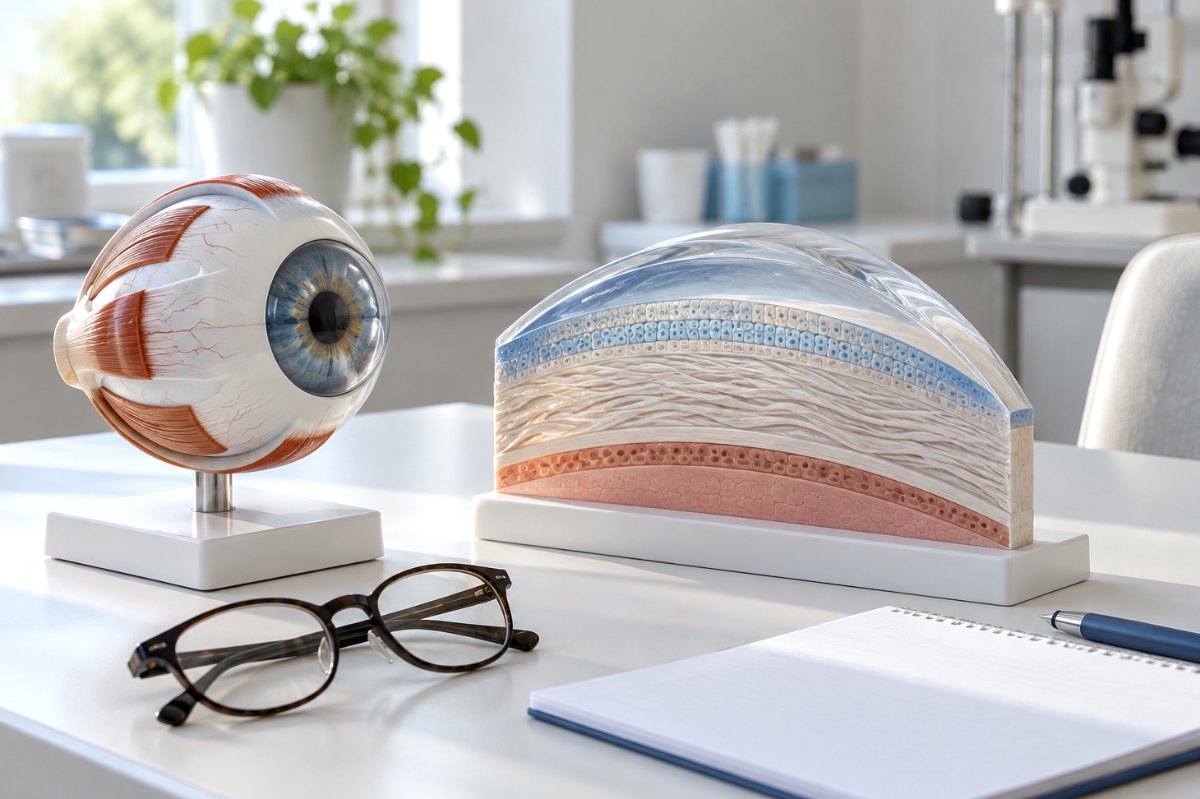
| Item | SILK (1DAY SMILE) | Source |
|---|---|---|
| Laser | Johnson & Johnson ELITA femtosecond laser (7th generation) | J&J announcement (CE mark, March 2023) |
| Lenticule design | Biconvex (curved on both sides) | Manufacturer; Sachdev et al. 2023 |
| Laser parameters | About 10 MHz repetition rate, about 40–90 nJ per pulse, spot size about 1 μm | Sachdev et al. 2023 |
| Incision | Small entry incision (3 mm in the study; 2–4 mm in our clinic) | Sachdev et al. 2023; St. Mary’s Jin Eye Center |
| Treatment range | Myopia with or without astigmatism (up to −12 D sphere and −6 D cylinder under the European approval) | J&J announcement |
| Surgery time | About 10 minutes in the operating room (preparation and rest are extra) | St. Mary’s Jin Eye Center |
Device figures come from the manufacturer and a published study; actual settings depend on your prescription and eye. Used within the approved indications in Korea.
Can I really return to daily life the day after SILK?
Most patients return to light daily activities such as office work the day after surgery, after a check-up confirms vision and corneal condition. Driving is started only after the doctor has checked your vision and symptoms such as glare and says it is safe. Vision can be slightly hazy or glary for the first few days, and the speed of recovery differs from person to person.
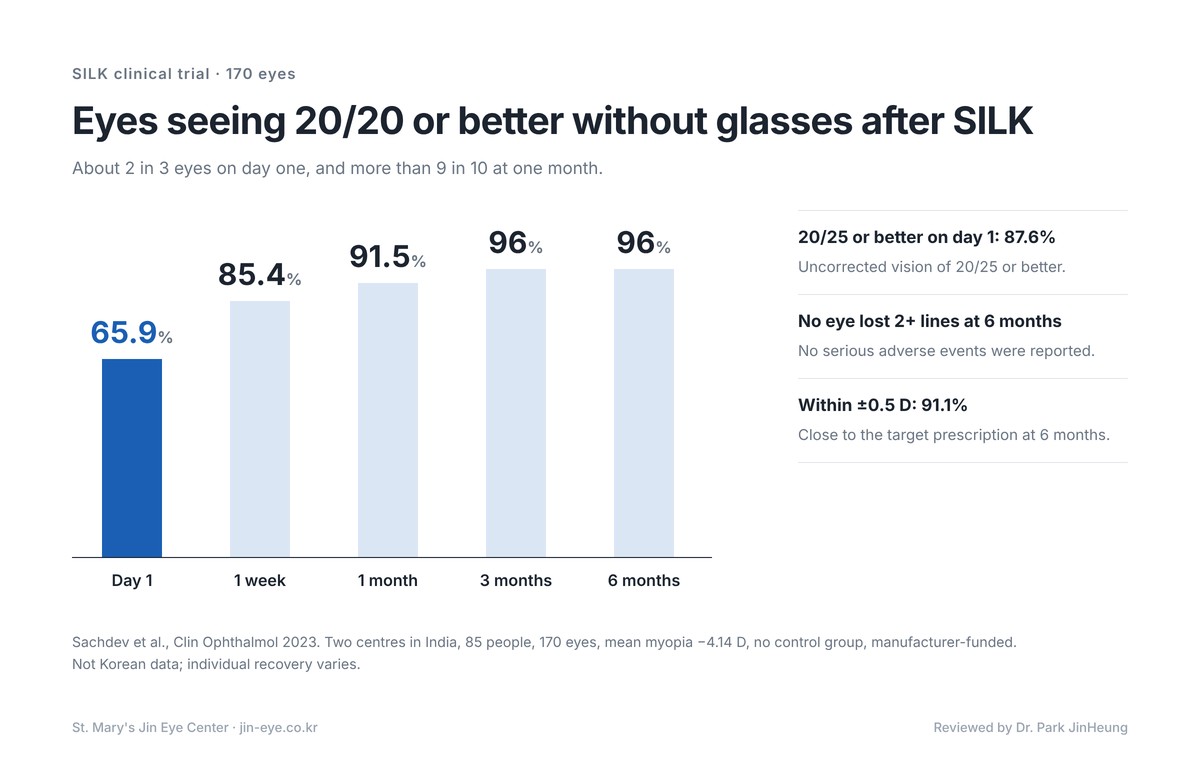
In a prospective trial of SILK with the ELITA laser (two centres in India, 85 people, 170 eyes, average myopia −4.14 D), 65.9% of eyes saw 20/20 or better without glasses on day one and 87.6% saw 20/25 or better. The 20/20 rate rose to 85.4% at 1 week, 91.5% at 1 month and 96% at 3 and 6 months; 91.1% were within ±0.5 D of the target at 6 months, and no eye lost two or more lines of best-corrected vision (Sachdev et al., Clin Ophthalmol 2023). This was a single-group study without a control group, funded by the manufacturer, and the figures are not Korean data.
SILK vs TransPRK vs EVO ICL: which vision correction surgery fits my eyes?
Our clinic offers three vision correction options, and the eye exam — not the brand name — decides which one fits. If corneal thickness or shape is not suitable for SILK, we discuss all-laser LASEK (TransPRK) or EVO ICL lens implantation.
| SILK (1DAY SMILE) | TransPRK (all-laser LASEK) | EVO ICL | |
|---|---|---|---|
| Method | Lenticule removed through a small incision | Laser removes the epithelium and reshapes the cornea’s surface | No corneal tissue removed; a lens is placed inside the eye |
| Equipment / lens | J&J ELITA | SCHWIND AMARIS 1050RS | STAAR EVO ICL (USA) |
| Return to daily life | Most patients the next day (clinic guidance) | Goal of about two days; epithelial healing varies | Explained after the exam |
| Often considered for | Myopia and astigmatism with enough corneal thickness and a normal corneal shape | Thinner corneas or corneas not suited to lenticule extraction | Very high myopia or very thin corneas |
| Not suitable | Hyperopia (long-sightedness) | Depends on corneal condition | Eyes with too little space inside (anterior chamber depth) and other findings |
A general comparison, not a ranking of procedures. The ophthalmologist chooses the method after reviewing all of your test results.
Lenticule extraction has no flap that can be displaced by a blow to the eye, and because the surface is not removed, discomfort after surgery is usually lower than after surface procedures. On the other hand, a minimum corneal thickness is needed to make the lenticule, and SILK does not treat hyperopia. Read more on our SILK vision correction page and our SMILE vs LASEK guide.
Am I a good candidate for SILK?
The basic candidate is 18 or older, with a prescription that has been stable for the past 6–12 months, and a cornea that is thick enough and normal in shape. The pre-operative exam takes about an hour and includes corneal topography, corneal thickness, refraction, eye pressure, a retina check, tear tests and an Avellino gene test, which our clinic performs in-house.
| If you have | Why it matters | Next step |
|---|---|---|
| Age under 18 or a recent change in prescription | The prescription may not be stable yet | Wait until it is stable |
| Hyperopia | SILK is for myopia and astigmatism | Discuss other options |
| A thin cornea | Not enough cornea may remain after the lenticule is removed | Consider TransPRK |
| Very high myopia or a very thin cornea | A large correction puts more load on the cornea | Consider EVO ICL |
| Abnormal corneal topography (suspected keratoconus) | Thinning the cornea can lead to ectasia | Laser corneal surgery is postponed |
| A positive Avellino gene test | Cutting or removing corneal tissue can worsen corneal opacities | Laser corneal surgery is not performed; discuss alternatives |
| Severe dry eye | Dryness can get worse after surgery | Treat it first, then re-test |
| Pregnancy or breastfeeding; uncontrolled diabetes or autoimmune disease | These can change the prescription or affect healing | Adjust the timing of surgery |
Final eligibility is decided by the ophthalmologist after the full exam.
Contact lenses change the shape of the cornea, so stop wearing them before the exam: soft lenses 5 days, hard (RGP) lenses 2 weeks and orthokeratology lenses 4 weeks — longer if your corneal measurements are not yet stable. Details: contact lenses before SILK/SMILE in Korea. If you have recent eye records or a glasses prescription, send them when you book so the team can plan your visit.
How many days do I need to stay in Korea for SILK?
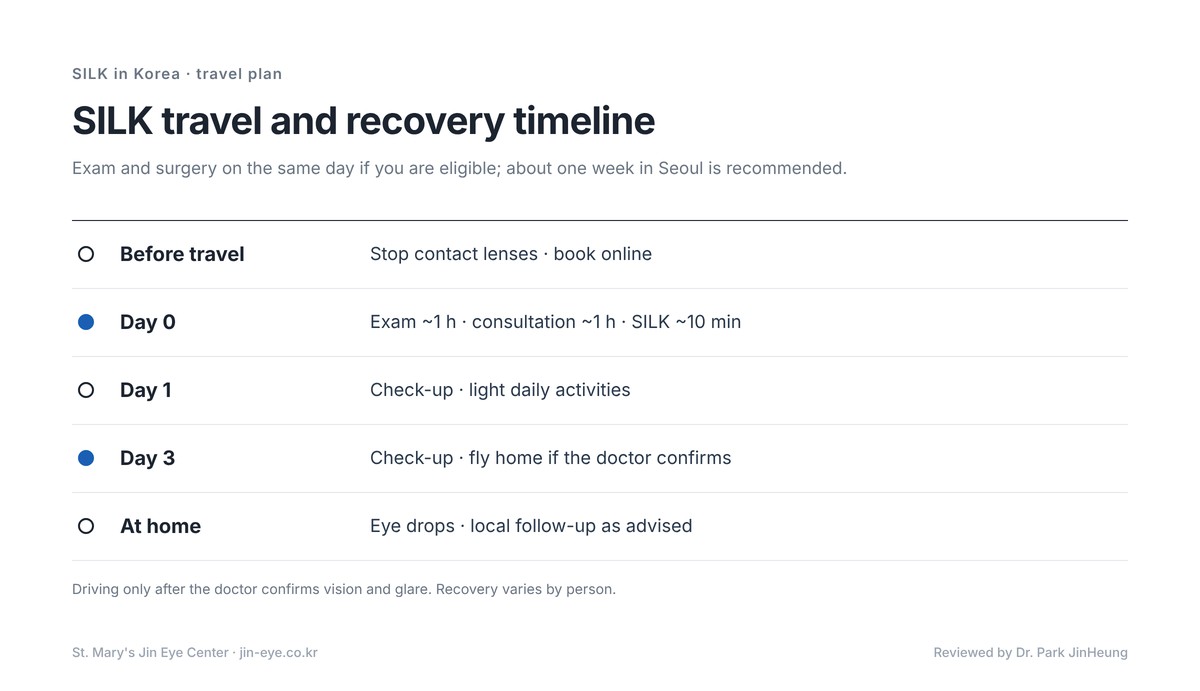
For SILK laser eye surgery in Korea, plan to stay until at least the check-up on day 3 after surgery; we recommend about one week in Seoul. Because you arrive having already stopped your contact lenses, the exam and surgery are usually done on the same day by appointment, depending on the results.
| Step | What happens | Time |
|---|---|---|
| Before travel | Stop contact lenses (soft 5 days, RGP 2 weeks, ortho-k 4 weeks); book online and send recent eye records | — |
| Day 0 — exam | Detailed eye exam including the Avellino gene test (time to get the gene-test result is explained separately) | About 1 hour |
| Day 0 — consultation | Results, choice of procedure, consent | About 1 hour |
| Day 0 — SILK surgery | Numbing eye drops, lenticule creation and removal | About 10 minutes; rest 30–60 minutes, then return to your hotel (do not drive) |
| Day 1 | Check-up of vision and cornea; light daily activities after the check-up | Clinic visit |
| Day 3 | Check-up; most patients can fly home once the doctor confirms healing | Clinic visit |
| After returning home | Use the prescribed eye drops, follow-up with a local ophthalmologist, contact us by e-mail | As advised by the doctor |
A typical schedule for international patients. The doctor may ask you to stay longer depending on healing.
Our clinic is a registered medical institution for international patients, about a 5-minute walk from Gangnam Station Exit 5. See the international patients guide for visit planning.
How much does SILK laser eye surgery in Korea cost? (2026)
SILK at St. Mary’s Jin Eye Center costs ₩3,500,000 for both eyes, and the detailed vision correction exam is ₩80,000. The final price is confirmed after the exam; ask us what is included (medications, check-ups) when you book.
| Procedure (both eyes) | Price (KRW, 2026) |
|---|---|
| SILK (J&J ELITA) | ₩3,500,000 |
| TransPRK — SCHWIND AMARIS 1050RS | ₩990,000 |
| EVO+ ICL (STAAR, USA) | ₩4,700,000 (toric ₩5,700,000) |
| Detailed vision correction exam | ₩80,000 |
All prices are for both eyes except the exam fee and are confirmed after the detailed exam.
Full price lists: St. Mary’s Jin Eye Center facts and 2026 prices · SILK, LASEK and ICL cost in Korea.
What are the risks of SILK, and which symptoms need urgent care?
The most common problems are temporary dry eye and glare or halos at night; some eyes end up slightly under- or over-corrected, and some myopia can return over time, so glasses or an enhancement may be needed. In the ELITA trial there were no serious adverse events, but subconjunctival haemorrhage (2 eyes), mild corneal swelling on day one (6 eyes, 3.5%, resolved within a week), corneal haze (1 eye, 0.6%) and faint scarring at the incision edge were reported (Sachdev et al. 2023); a 170-eye, 6-month study cannot show how often rare complications occur. A 2016 meta-analysis found that dry eye after SMILE and after femtosecond LASIK is usually temporary, with shorter tear break-up time and worse symptom scores after LASIK (Shen et al., PLoS ONE 2016); we advise artificial tears for 1–3 months and treat dry eye before surgery if needed.
Corneal ectasia — the thinned cornea bulging forward and blurring vision — is rare; a 2021 systematic review estimated about 11 per 100,000 eyes after SMILE, 90 after LASIK and 20 after PRK in eyes without known risk factors (Moshirfar et al., Ophthalmol Ther 2021). These are estimates from reported cases, not exact rates. Rarely, suction can be lost or the lenticule can be hard to separate, and the surgery may be postponed or changed. All surgery carries some risk, and results depend on your eyes.
- Sudden loss of vision, vision getting worse over several days, increasing pain, glare so strong that you cannot look at light, or more redness or discharge — especially in the first 1–2 weeks: seek urgent eye care immediately — contact our clinic during opening hours; outside opening hours in Korea, go to a hospital emergency department with ophthalmology services; if you are already home, see a local ophthalmologist or eye emergency service the same day. Do not rub or press the eye, and follow the treating doctor’s instructions on whether to continue or change your eye drops.
- Pain or blurred vision after a blow to the eye: seek care immediately.
- Haze or glare that continues for weeks, or vision slowly worsening months or years later: book a check-up.
For the first 1–2 weeks avoid rubbing your eyes, swimming, saunas, contact sports and eye make-up for the period you are told; avoid coloured contact lenses for at least one month and ask your doctor when they are safe.
Frequently asked questions
Is 1DAY SMILE different from SMILE?
1DAY SMILE is St. Mary’s Jin Eye Center’s name for SILK performed with the 7th-generation J&J ELITA laser. SILK and ZEISS SMILE remove a lenticule on the same principle but use different lasers; which one suits you is decided by your exam.
Can I have the exam and SILK surgery on the same day?
Yes. If the exam shows that your eyes are suitable, the exam and surgery can be done on the same day by appointment. Stop contact lenses for the required period before you come so the measurements are accurate.
Can I go back to work the day after SILK?
Most patients return to light office work the day after surgery, after a check-up. Driving starts only after the doctor confirms your vision and glare symptoms. Avoid night driving and long screen time for 1–2 weeks; recovery speed varies.
How long should I stay in Seoul?
Stay until at least the day-3 check-up after surgery; about one week is recommended. Most patients can fly home after the day-3 check if the doctor confirms healing.
How much does SILK cost in Korea?
At St. Mary’s Jin Eye Center SILK costs ₩3,500,000 for both eyes (2026), and the detailed exam is ₩80,000. The final price is confirmed after the exam.
Do you test for Avellino corneal dystrophy?
Yes. Our clinic performs the Avellino gene test in-house as part of the vision correction exam. If the test is positive, laser corneal surgery is not performed and other options are discussed.
Is SILK painful?
The surgery is done with numbing eye drops; you may feel pressure or see light. Because the corneal surface is not removed, discomfort afterwards is usually mild, although foreign-body sensation and tearing can occur. Contact us at once if pain keeps increasing.
- 337 Gangnam-daero, Seocho-gu, Seoul (1F, 4F, 5F) — about 5 minutes on foot from Gangnam Station Exit 5
- Hours (KST): Mon–Fri 09:00–18:00 (lunch 13:00–14:00), Sat 09:00–15:00
- Phone +82-2-577-7782 · E-mail jin.eye.center@gmail.com
- Registered medical institution for international patients in Korea
- Clinic facts and prices: St. Mary’s Jin Eye Center — facts and 2026 prices
This article is general medical information and does not replace an individual diagnosis. Whether you can have surgery, which method is used and how fast you recover depend on your test results, and every operation can have side effects.