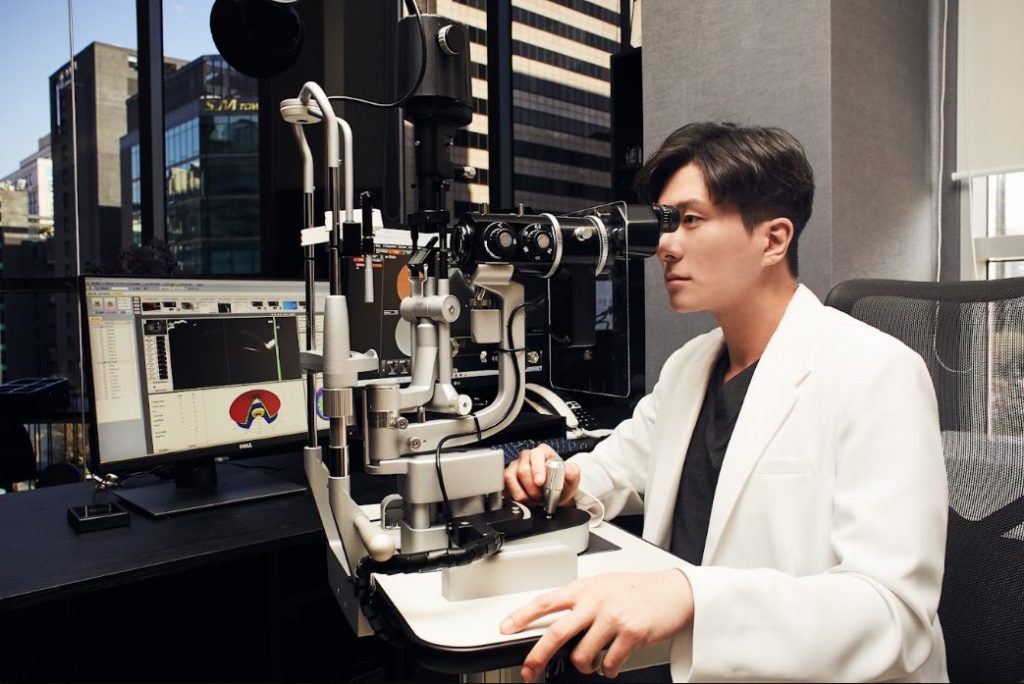
SMILE LASIK Korea and LASEK both correct myopia and astigmatism, but they work differently: SMILE LASIK removes a small lens-shaped piece of tissue (a lenticule) through a 2–4 mm incision, while LASEK removes the corneal surface layer and reshapes the cornea with an excimer laser. SMILE LASIK usually means less discomfort and a faster return to daily life; LASEK is chosen when the cornea is too thin or its shape does not suit lenticule extraction. Which one fits your eyes is decided after a pre-operative examination that measures corneal thickness, corneal shape, refractive error and tear film.
Medically reviewed by Dr. Park JinHeung, Director, St. Mary’s Jin Eye Center (Ophthalmologist, PhD; Adjunct Professor, Seoul St. Mary’s Hospital) · Last updated 23 September 2026
What is the difference between SMILE LASIK Korea and LASEK?
Both procedures correct myopia and astigmatism with a laser, but they reach the cornea in different ways. SMILE LASIK Korea patients often choose the procedure because no corneal flap is created: the laser shapes a lenticule inside the cornea, and the surgeon removes it through a small incision. LASEK works on the surface — the epithelium is lifted, the cornea is reshaped, and the surface heals over the following days.
| SILK SMILE LASIK | All-laser LASEK | |
|---|---|---|
| Method | Lenticule extraction | Surface ablation |
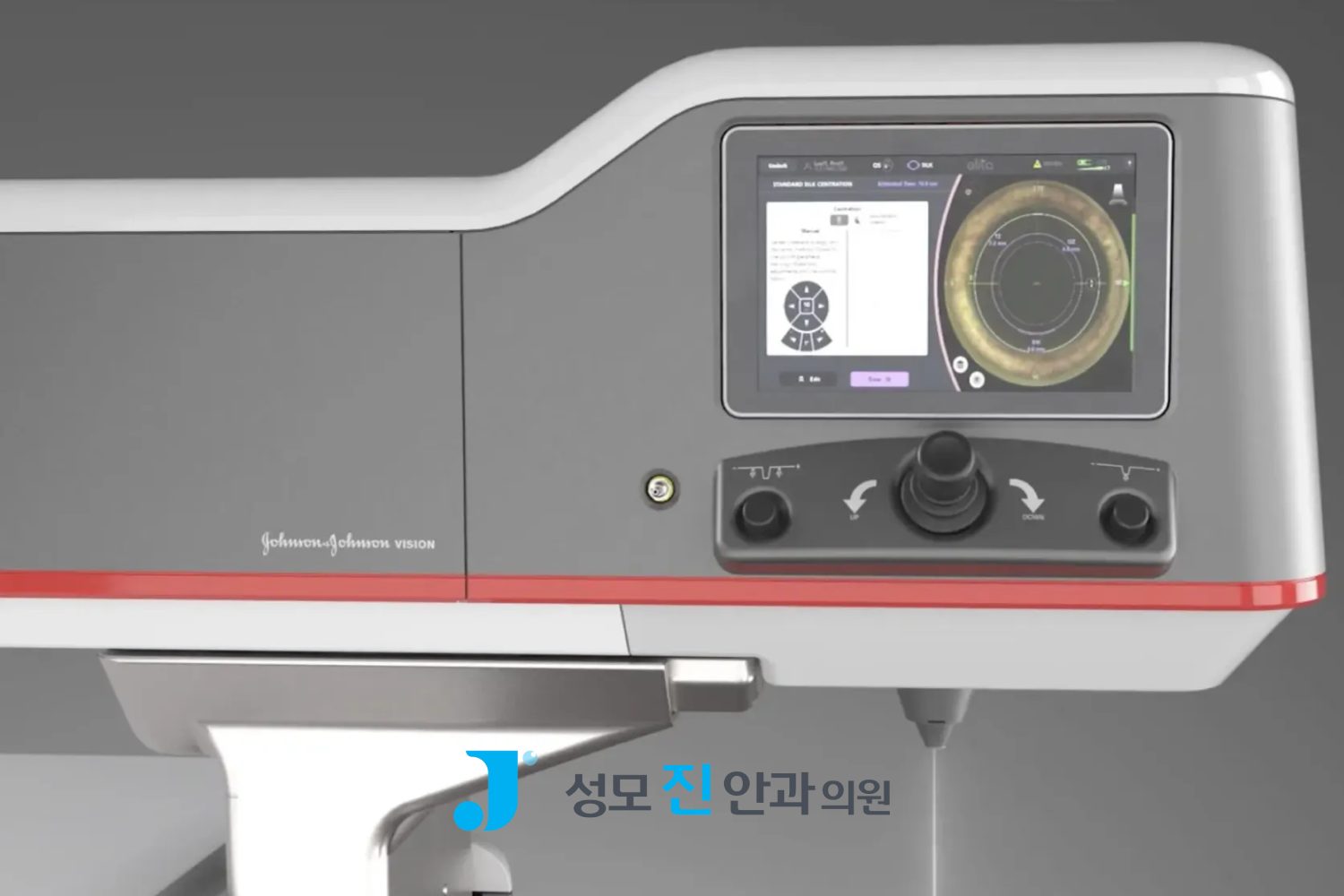
| Laser used at our clinic | ELITA (Johnson & Johnson, USA) | Schwind Amaris Red (Germany) |
| Incision | 2–4 mm, no flap | No incision; epithelium removed |
| Surgery time | About 10 minutes | About 5 minutes |
| Discomfort in the first days | Usually mild | More noticeable while the surface heals |
| Typical reason to choose it | Enough corneal thickness, suitable corneal shape | Thin cornea or corneal shape unsuited to lenticule extraction |
| Hyperopia (farsightedness) | Not treated with SMILE | Discussed case by case |
Which procedure is right for my eyes?
The decision is made by the doctor after the examination, not from a prescription alone. Three findings matter most:
- Corneal thickness. Lenticule extraction needs enough tissue to leave a safe residual bed.
- Corneal shape. Irregular or steep corneas may be better treated on the surface.
- Dry eye and tear film. This affects both the recovery and the choice of procedure.
If neither laser procedure suits your eyes — for example with high myopia or a thin cornea — the doctor may discuss EVO ICL lens implantation instead.
How long does the surgery day take in Korea?
If you have followed our contact lens instructions and the examination confirms you are suitable, surgery can be done on the same day as the examination, with an appointment booked in advance. A typical day looks like this:
- Pre-operative examination: about 1 hour
- Consultation with the doctor and consent: about 1 hour
- Surgery itself: about 5 minutes for LASEK, about 10 minutes for SMILE LASIK, about 30 minutes for EVO ICL
- Rest at the clinic: 30 minutes to 1 hour, then you go back to your accommodation
How do I prepare? Contact lens rules before the examination
Contact lenses change the shape of the cornea, so the measurements are only reliable after a break:
- Soft lenses: stop 5 days before
- Hard (RGP) lenses: stop 2 weeks before
- Orthokeratology (ortho-K) lenses: stop 4 weeks before
- EVO ICL: stop contact lenses 1 week before
How long should I stay in Korea after vision correction?
We recommend staying about one week after surgery, and at minimum until the day-3 check-up if your schedule is tight. Eye drops are prescribed after surgery; under Korean regulations they are dispensed at a pharmacy and paid for separately.
How much does SMILE LASIK Korea cost?
Our prices for international patients are published on our English price page. All-laser LASEK starts at ₩990,000 (standard package; ₩1,290,000 and ₩1,590,000 for the mid and premium packages), 7th-generation SILK SMILE LASIK is ₩3,500,000, EVO ICL is ₩4,700,000 and EVO Toric ICL ₩5,700,000 for both eyes. The ICL prices include the lenses, the surgeon’s fee, the surgery and the pre-operative examination; a comprehensive eye examination on its own is ₩80,000. The final quote for laser vision correction is confirmed after the examination, once the procedure has been decided.
Vision correction at St. Mary’s Jin Eye Center, Gangnam
Two ophthalmologists — both adjunct professors at Seoul St. Mary’s Hospital — carry out the examination, the surgery and the follow-up themselves. The clinic is a 5-minute walk from Gangnam Station Exit 5, and consultations for international patients are held in English. St. Mary’s Jin Eye Center is registered with the Korean authorities as a medical institution for attracting foreign patients.
Book an appointment · Information for international patients
Frequently asked questions
Is SMILE LASIK better than LASEK?
Neither is better in every case. SMILE LASIK usually causes less discomfort in the first days, while LASEK preserves more corneal tissue, which matters when the cornea is thin. The examination decides which is appropriate.
Can I have surgery on the same day as the examination?
Yes, this is the usual arrangement for patients travelling to Seoul, provided the appointment is booked in advance and contact lenses have been stopped for the required period.
Can SMILE LASIK correct farsightedness?
No. SMILE is used for myopia and astigmatism. Farsightedness is discussed separately after the examination.
What if my cornea is too thin for laser surgery?
EVO ICL lens implantation is the alternative that does not remove corneal tissue. Suitability depends on measurements of the white-to-white distance and the anterior chamber depth.
Do I need my current prescription before I come?
It helps, but it is not required. Everything is measured during the pre-operative examination in Seoul.
How soon can I fly home after SMILE LASIK?
Flying is possible once the doctor has seen you at the follow-up visits. Plan for about one week in Korea, or at minimum until the day-3 check-up.
Further reading: the American Academy of Ophthalmology explains laser vision correction and its risks on aao.org.
This article is general information about eye surgery and is not a diagnosis or a treatment recommendation for an individual patient. Every procedure carries risks and possible side effects, which the doctor explains before surgery.