Conjunctivitis (Pink Eye) is an inflammation of the conjunctiva—the thin, clear membrane that covers the white part of the eye and lines the inside of the eyelids.
The conjunctiva plays a vital role in protecting and lubricating the eye; when inflamed, it leads to redness, increased tearing, discharge, and a foreign body sensation.
As a very common condition, conjunctivitis can be triggered by various factors, ranging from bacterial and viral infections to allergies and irritants.
While most cases are mild, proper treatment is necessary depending on the cause. Particularly, highly contagious forms can spread rapidly, requiring extra caution and timely care.

Symptoms of Conjunctivitis
Conjunctivitis can progress rapidly and is highly contagious, making early intervention crucial.
If you experience any of the following symptoms, we recommend seeking an immediate eye examination to begin appropriate treatment.
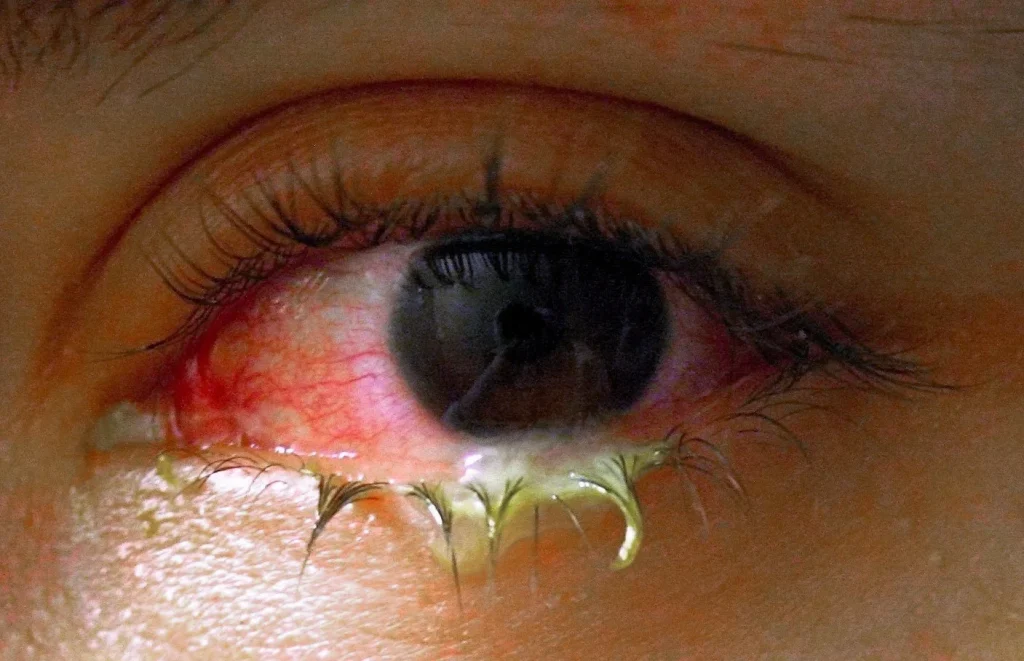
Blood vessels in the conjunctiva dilate,
causing the white part of the eye to appear pink or red.
Viral conjunctivitis is characterized by clear, watery discharge,
while bacterial conjunctivitis typically produces thick, sticky, yellow or green purulent discharge.
In cases of allergic conjunctivitis,
the discharge is usually clear and stringy or mucous-like.
It feels gritty,
like sand has gotten into my eye.
Causes of Conjunctivitis
Infectious (bacterial, viral)
It is primarily caused by infection with pathogens such as bacteria or viruses and is highly contagious.
Allergic (non-infectious)
This condition occurs when an immune response to specific external substances, such as pollen or house dust mites, becomes excessive, leading to inflammation.
Other/Irritant (Non-infectious)
This condition occurs when the conjunctiva becomes inflamed due to external physical or
chemical irritants. Cosmetics or contact lenses can be the cause.
Prevention Guidelines for Conjunctivitis
Wash your hands frequently with soap, and avoid touching your eyes with unwashed hands.
Avoid contact with patients with epidemic conjunctivitis and disinfect objects they have touched (door handles, faucets, etc.). Patients should avoid using swimming pools and public bathhouses while symptomatic and refrain from attending school or work.
Rubbing your eyes can spread infection or worsen symptoms.
If it itches, use a cold compress or artificial tears.
Viral conjunctivitis is highly contagious. It remains contagious for approximately 10 to 14 days after symptoms appear and spreads easily through direct contact or contaminated objects.
Bacterial conjunctivitis can also be contagious, but less so than viral conjunctivitis. Allergic conjunctivitis is not contagious.
Most cases of simple conjunctivitis do not affect vision. However, if the inflammation spreads to the cornea (keratoconjunctivitis), vision loss may occur.
Particularly in adenoviral keratoconjunctivitis, if subepithelial corneal opacities develop, vision impairment may persist for weeks to months. Conditions like herpes keratitis and gonococcal conjunctivitis can also threaten vision through corneal complications.
Identifying and avoiding the causative allergen is most important. Confirm the cause through allergy testing and thoroughly manage the environment (washing bedding, using air purifiers, avoiding going out during pollen season, etc.). Instilling mast cell stabilizers in advance during periods when symptoms are expected can help prevent them.
In severe cases, immunotherapy (allergy shots/sublingual immunotherapy) may be considered.
You should stop wearing contact lenses while experiencing symptoms of conjunctivitis. Lenses can worsen the infection or increase the risk of corneal complications.
Only resume wearing them after symptoms have completely resolved and your eye doctor gives permission. It is advisable to discard the lenses and cases used during the infection and replace them with new ones.
Check out the blog below for more information on eye health.