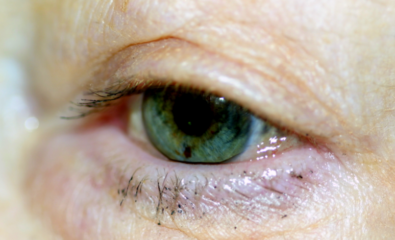
Conjunctivochalasis is a condition characterized by the loosening of the conjunctiva—the thin tissue covering the white part of the eye and the inner eyelids.
In this condition, excess, saggy conjunctival folds primarily develop on the lower part of the eyeball.
These folds can cause excessive tearing, eye pain, and a dry, gritty sensation similar to dry eye syndrome. In severe cases, it may lead to exposure keratitis,
which can cause corneal clouding and subsequent vision impairment.
Severity of Conjunctivochalasis
Conjunctivochalasis occurs when the conjunctiva—the membrane covering the white of the eye—loses its elasticity and sags with age. Research analyzing conjunctival cells has shown a significant increase in inflammation-related enzymes (MMPs). This leads to inflammation and oxidative stress within the conjunctiva and tear film, triggering various symptoms.
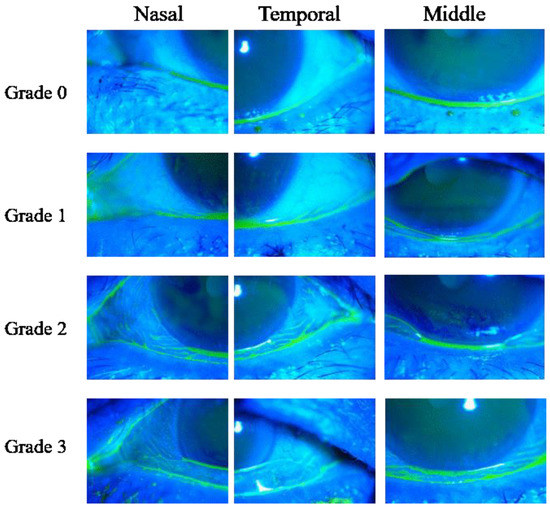
The severity of conjunctivochalasis is evaluated using the LIPCOF (Lid-Parallel Conjunctival Folds) test. The condition is classified into four stages, ranging from Stage 0 to Stage 3.
Grade 0: No persistent conjunctival folds
Grade 1: A single small conjunctival fold.
Grade 2)Two or more conjunctival folds are present, but they do not extend beyond the height of the tear meniscus.
Grade 3: Multiple conjunctival folds are present, formed higher than the level of the tear duct.
Treatment for Conjunctivochalasis
Conjunctival Cauterization
The surgery time is short, and no stitches are required.
Scarring concerns are minimal, and recovery is quick.
Conjunctival Resection
Direct removal of sagging conjunctiva
effectively resolves discomfort
and foreign body sensation during blinking.
Conjunctival Resection and Amniotic Membrane Transplantation
The amniotic membrane is placed over the site where the conjunctiva has been removed to aid wound healing and reduce the risk of narrowing of the eye tissue.
Conjunctival-Scleral Fixation
Securely anchors the loosened conjunctiva to the eye wall (sclera)
to firmly hold the tissue in place and prevent recurrence.
Laser and Radiofrequency Ablation
It is much less invasive as it does not involve incisions, and it precisely tightens sagging areas, resulting in a very short procedure time.
Conjunctival Recession and Amniotic Membrane Grafting
Push the conjunctiva backward to create sufficient space in the lacrimal sac,
improving tear drainage
and ensuring smooth circulation.
Among these, Conjunctival Cauterizationusing high-frequency needles is a recently developed technique
that is gaining significant recognition for its enhanced convenience and safety.
Jin Eye Center has introduced ACUTRONthe latest high-frequency needle cauterization system,
to effectively treat patients experiencing discomfort from conjunctival chalasis.
ACUTRON
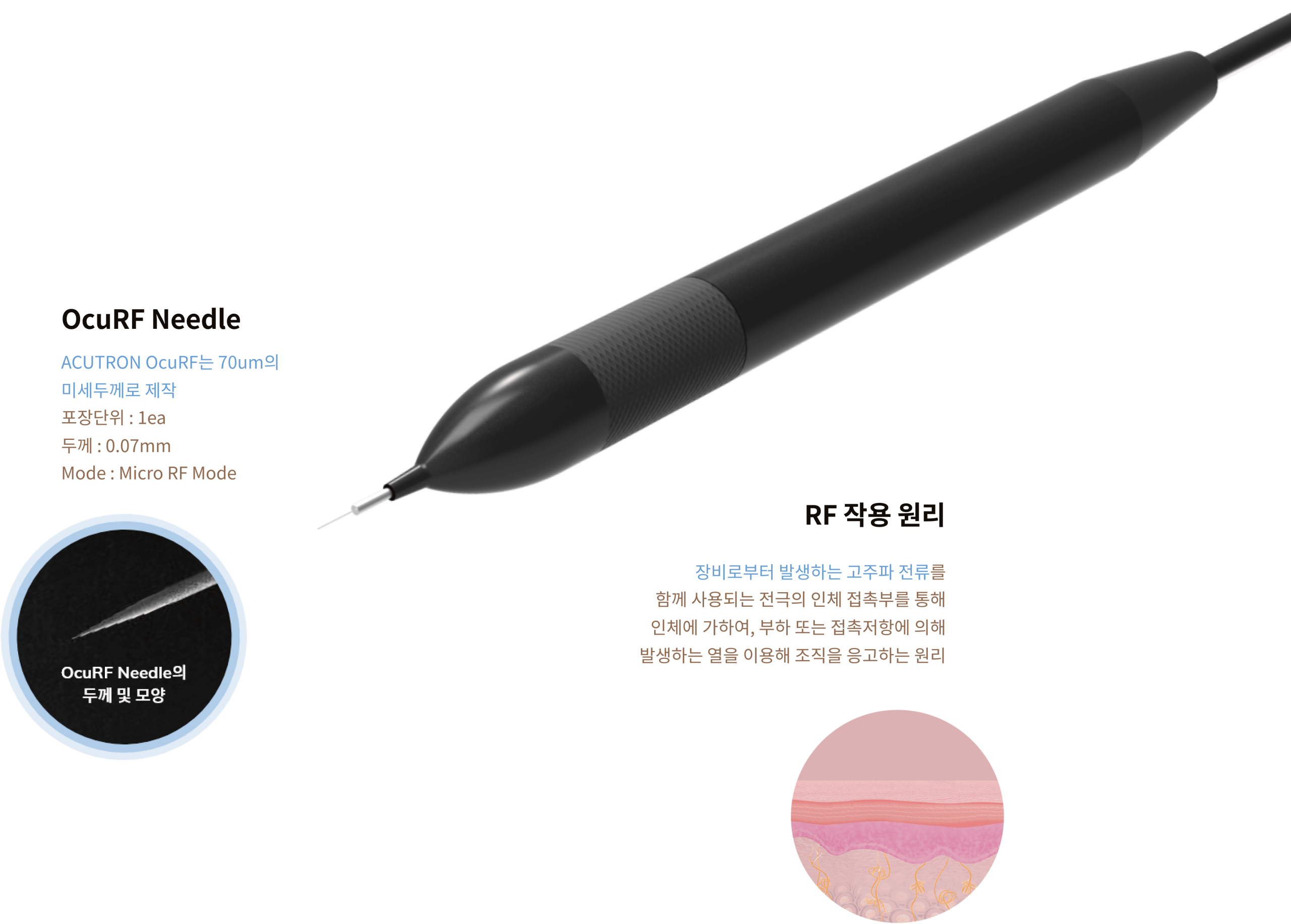
Acutronis a device that delivers energy deep into tissue using 2MHz high-frequency waves.
It can be widely utilized for everything from precise procedures to
incisions and hemostasis through its Micro RF Mode and Normal RF Mode.
The 70μm ultra-fine OcuRF Needle and low-power pulses enable delicate and precise procedures, making it widely used for treatments in cosmetic ophthalmology and dry eye conditions such as conjunctival laxity, punctal occlusion, and trichiasis.
Additionally, this equipment has received FDA, PMDA, CE, and MFDS approval, verifying its safety and efficacy.
FAQ
What is Conjunctivochalasis?
Conjunctivochalasis refers to a condition where the conjunctiva of the eye stretches or sags, causing it to lift away from its normal position. This occurs when the conjunctiva covering the surface of the eye loses its elasticity, commonly appearing in middle-aged and older adults.
Q. What symptoms appear?
The enlarged conjunctiva interferes with tear film formation, and each blink causes the eyelid to irritate the conjunctiva, leading to a foreign body sensation, redness, and blurred vision.
It obstructs tear circulation, causing excessive tearing.
Q. Is it different from dry eye syndrome?
When Conjunctivochalasis occurs, normal tear drainage is obstructed, destabilizing the formation of the tear film on the eye's surface and causing symptoms similar to dry eye syndrome.
This can lead to the peculiar symptom of the eyes feeling dry yet producing excessive tears, making it easy to confuse with dry eye syndrome.
Q. Is there a way to prevent it?
In areas with strong direct sunlight, it is advisable to wear sunglasses to block as much ultraviolet radiation as possible.
Avoid prolonged use of contact lenses and refrain from rubbing your eyes frequently.
Q. Can conjunctival laxity occur at a young age?
The primary cause is aging, with the condition frequently occurring in middle-aged individuals in their 40s and 50s. It can also develop due to atopic dermatitis, conjunctivitis, or frequent contact lens use.
Therefore, it can occur even in younger individuals who wear contact lenses for extended periods or have chronic conjunctivitis.
Learn more
Latest Information on Eye Health
Check out the blog below for more information on eye health.
 English