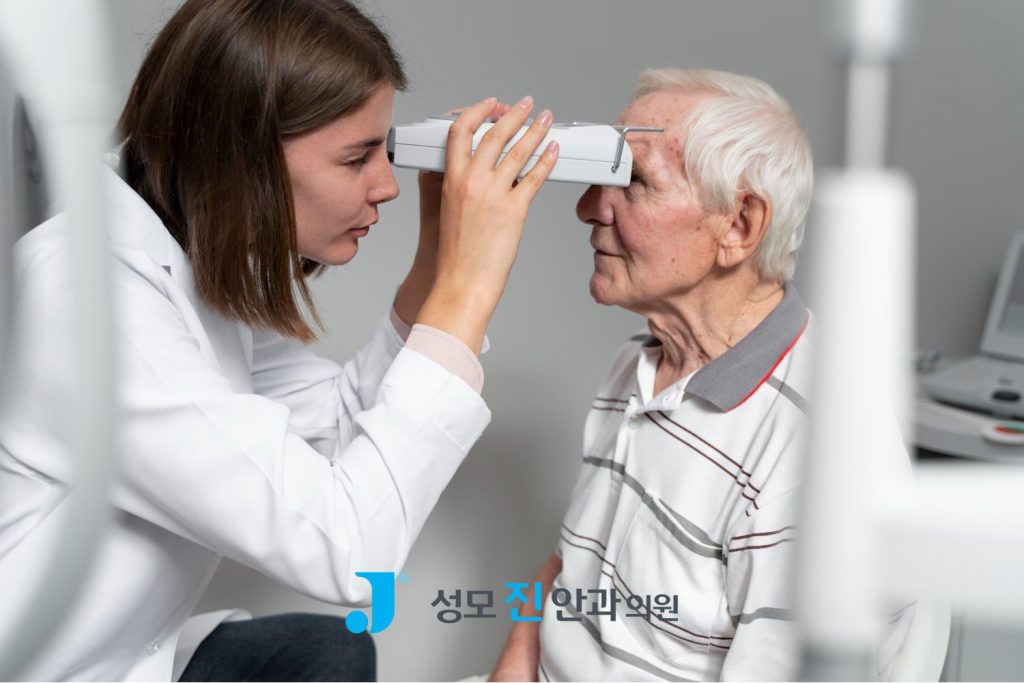
Presbyopia is a natural part of the aging process that occurs as the eye's lens gradually loses its elasticity, making it difficult to focus on close objects.
This condition typically begins around the age of 40 and is a normal change that everyone will eventually experience.
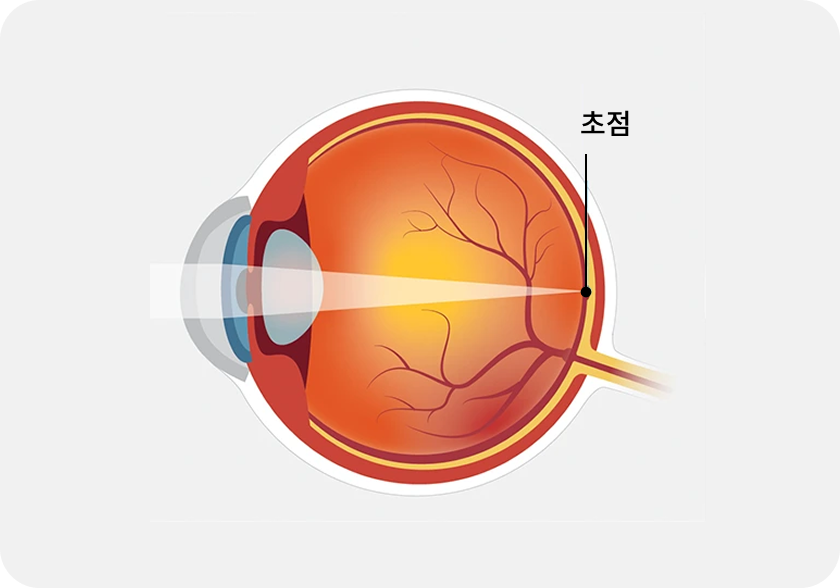
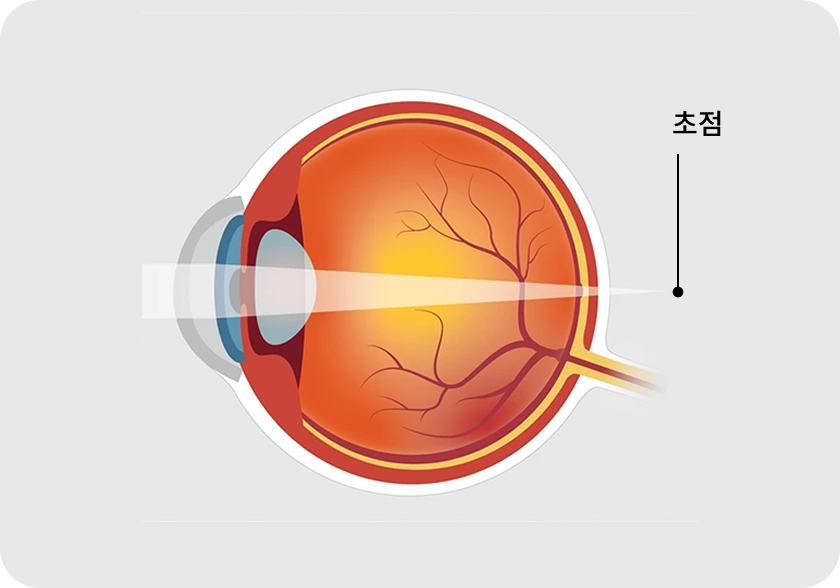
Normal focus position
Presbyopia Focus Position
The primary symptoms of presbyopia
The text on my phone is hard to see.
My eyes feel gritty and heavy.
I'm wearing reading glasses because the text is hard to see.
Vision deteriorates in dark places.
Reading books gives me a headache.
What is a cataract?
A cataract is a condition where the crystalline lens—which acts like a camera lens inside the eye—becomes cloudy, causing your vision to blur.
While a healthy lens is transparent and delivers light accurately to the retina, a cataract causes the lens to turn milky or opaque. This leads to foggy vision, as if you are looking through a mist, and often causes light sensitivity or glare.
Normal lens
Cataract lens
Common symptoms of cataracts
사물이 Double vision.
Vision remains blurry even with reading glasses.
Difficulty distinguishing colors.이 어려워진다.
Light scattering or starbursts.
Increasedsensitivity to glare.
Types of Cataracts
Age-related cataract
Congenital cataract
Secondary cataract
Traumatic cataract
Diabetic cataract
Drug-induced cataract
Causes of Cataracts
Age
This is the most common cause of cataracts.
As you age, the eye's lens gradually becomes harder and cloudier, leading to the development of a cataract.
Genetics
If there is a family history of cataracts,
the genetic probability of developing the condition may increase.
Diabetes
People with diabetes have a higher risk of developing cataracts.
High blood sugar levels can affect the proteins within the eye's lens, leading to the formation of a cataract.
Eye Trauma
After an injury or impact to the eye,
damage to the lens can lead to
the development of a cataract.
medication
Steroid medications are a primary example of drugs that can induce cataracts
UV Exposure
Excessive exposure to ultraviolet (UV) rays
can damage the cells in the lens,
leading to the development of a cataract.
Cataract Treatment
Initial treatment
Follow-up observation and medication
In the early stages of a cataract, if vision loss is minimal and does not significantly affect daily life,
the condition can be managed through
regular check-ups and medicated eye drops to slow its progression.
However, it is important to note that eye drops cannot reverse the cloudiness of the lens
or restore its clarity.
Fundamental treatment
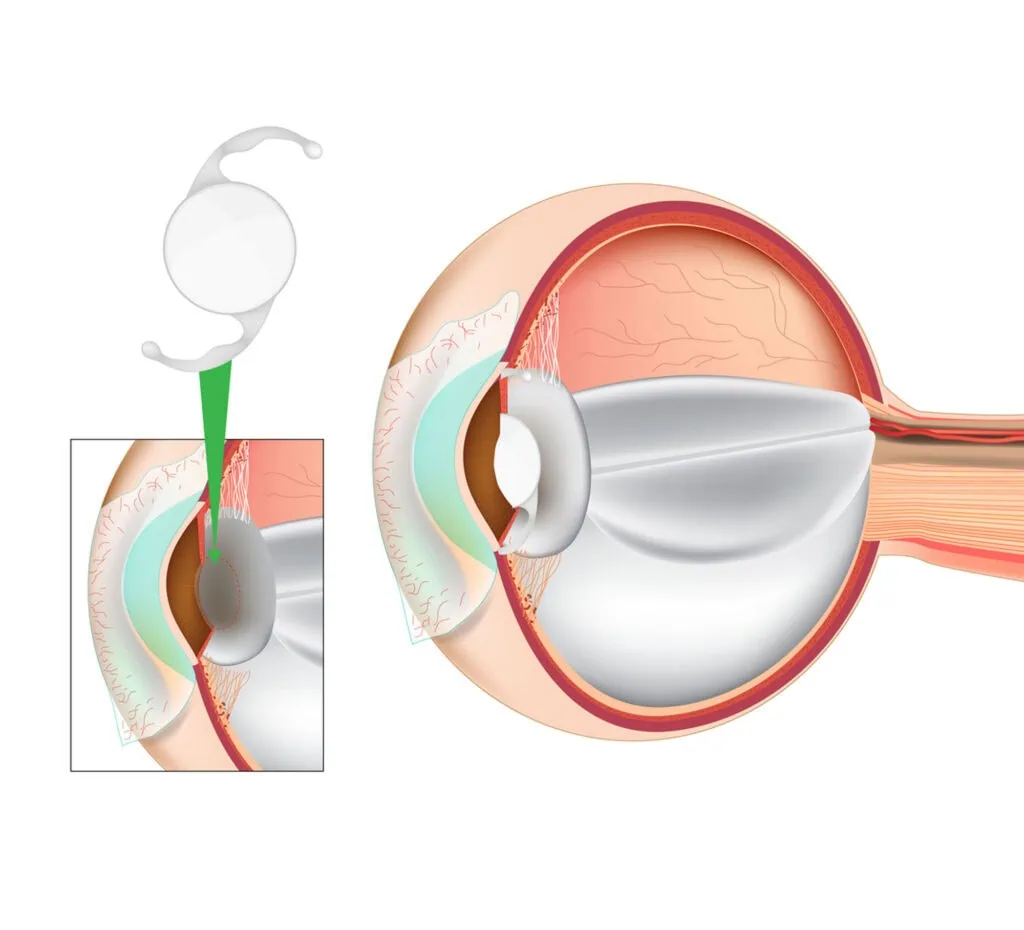
Cataract Surgery
The most effective way to treat cataracts is through surgery.
During the surgery,
the clouded lens is removed, and a new artificial lens (IOL) is inserted in its place
To date, there is no medication available that can restore clarity to a clouded lens.
While medicated eye drops (such as cataract prevention drops) may help slow the progression, they cannot completely eliminate cataracts that have already developed.
The only definitive treatment is surgery.
Q. Can cataracts develop again after surgery?
The removed lens itself will not develop cataracts again, but a condition called a secondary cataract may occur after surgery.
This involves clouding of the thin membrane (posterior capsule) that holds the artificial lens in place, which can be relatively easily improved with laser treatment.
Q. How are cataracts diagnosed?
The degree of lens opacity is directly assessed through microscopic examination.
Vision tests, intraocular pressure measurements, and retinal examinations are also performed to evaluate the overall condition of the eye.
Q. Can cataracts be prevented?
While it is difficult to completely prevent age-related cataracts, certain lifestyle habits can help slow their progression. These include wearing UV-protective sunglasses, quitting smoking, managing diabetes, and eating foods rich in antioxidants.
Most importantly, regular eye exams are essential for early detection.
Q. When should I have cataract surgery?
Surgery is typically considered when vision has declined enough to interfere with your daily life.
If activities such as driving, reading, or watching TV become difficult—or if your profession requires precise vision—the timing of the surgery may be moved forward.
Learn more
Recent Updates on Cataract Treatment at St. Mary Jin Eye Center
Check out the blog below for more information about cataracts.







 English (UK)