

hello. We are St. Mary's Eye Clinic, a clinic that treats with sincerity. If you're considering or facing cataract surgery, you've probably heard of the intraocular lenses used in cataract surgery. If you've ever wondered about the different types of intraocular lenses used in cataract surgery and their characteristics, we've put together a list of all the details. In particular, if you've ever wondered what the difference is between monofocal and multifocal lenses, or which lens should be used for your eyes, this article is for you.
1. cataract symptoms and surgical options
Cataract symptoms
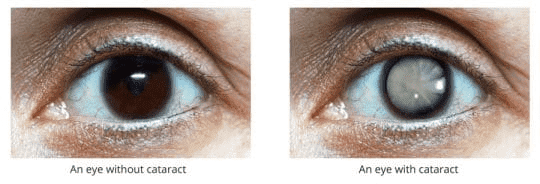
Source: Atlas eye centre
A cataract is a clouding of the lens of the eye, which acts like a camera lens, causing blurred vision of objects in front of the eye..
When cataracts develop, they can cause discomfort in your daily life, such as blurred images of objects in front of you, like when your camera lens gets smudges or dust on it, or difficulty distinguishing colours or seeing one object as multiple objects.
Although cataracts don't progress quickly, they can lead to blindness if left untreated, so it's important to treat them quickly with medication or surgery. If you suspect you may have cataracts, check out the early symptoms of cataracts and get a quick consultation about which surgery is right for you.
Know the early symptoms of cataracts and the cost of surgery
Cataract Surgery Methods
There are two main ways to treat cataracts: medication and surgery to insert an intraocular lens. Medication cannot restore lost vision, so surgery is the only option.
In a nutshell, cataract surgery involves replacing the clouded lens with an artificial lens, which allows the lens to perform its refractive function.. Cataract surgery involves making an incision in the cornea with a laser, removing the clouded lens, and inserting an intraocular lens.
There are two types of intraocular lenses: monofocal lenses, which have a single focus, and multifocal lenses, which can see both far and near. The type of lens used in the surgery depends on the patient's eye condition and lifestyle, and it is essential to consult with a specialist about the specific cataract surgery method.
2. types of intraocular lenses for cataract surgery
Features of monofocal lenses
A prime lens is a lens with a single focal point, which means that it focuses on just one of the following: near, medium, or far.
Because they only focus in one place, they don't improve your unfocused vision. For example, if you have a monovision lens that focuses on distant objects, you may find that after cataract surgery you can't see objects up close and need to wear reading glasses.
Single vision lenses are best for people who do a lot of distance or near work, or for older adults who do less near work.
Features of multifocal lenses
Multifocal lenses are lenses that focus both near and far, giving you the ability to see at all distances. Multifocal IOLs can also focus intermediate distances in addition to near and far, allowing for trifocal, quadruple, and even continuous focus correction.
Multifocal IOLs are great for people with active jobs because they eliminate the need to wear reading glasses after cataract surgery. However, multifocal IOLs scatter a lot of light, which can cause glare, so they may not be suitable for you depending on your job or daily living environment.
Types of monofocal and multifocal IOL lenses
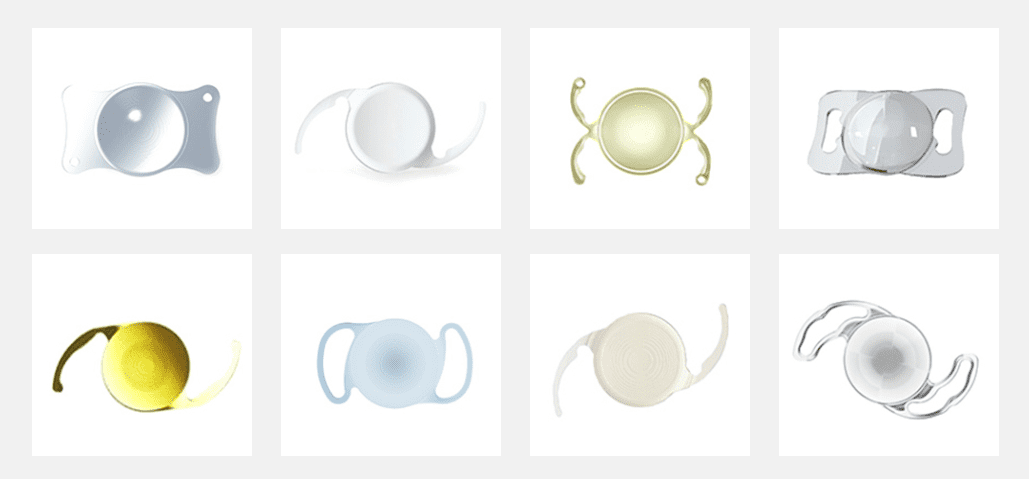
As mentioned earlier, bifocals and multifocals have definite advantages and disadvantages. What may be a good monovision lens for one person may not be a good choice for another. This is why it's important to discuss your eye condition, occupation, and living situation with your eye care professional when choosing an IOL for cataract surgery.
The most common intraocular lens companies used in cataract surgery are Alcon, Johnson & Johnson, and PhysIOL.
Alcon's flagship lens is the quadruplex, near-focusing phanoptics, which uses the most light of any presbyopic cataract intraocular lens available, allowing you to see clearly at all distances. It is also the most popular cataract surgery lens, with more than 100 million procedures performed worldwide.
You can also use Clarion Panoptics lenses, which offer superior distance capabilities and less light smearing, and Clarion Panoptics lenses, which are upgraded from the original Panoptics IQ platform to the Clarion platform with improved light transmission for even greater vision clarity.
Johnson & Johnson's flagship product is Synergy, a multifocal lens specialising in near work, which combines the advantages of both continuous and multifocal lenses. Other lenses include Symphony, a continuous lens with strengths at distance, which is often used in cataract surgery.
In recent years, different lenses have been placed in both eyes during cataract surgery. By using lenses with different strengths and weaknesses, the two lenses can complement each other and help patients see better and return to their normal activities.
Learn more about premium intraocular lenses
3. What to expect after cataract surgery
Even with surgery, your vision will not improve immediately after cataract surgery, and recovery can vary from person to person. No matter how successful your surgery is, it's important to take good care of yourself afterwards. Here's what to do after cataract surgery.
Protective eye patch Unconsciously rubbing your eyes can cause inflammation of the surgical site. Sleep with a protective eye patch for at least 2 weeks after surgery to protect your eyes.
Face washing, bathing For a week after surgery, you should not wash your face with water, but wipe it with a damp cloth. It is recommended to avoid baths or saunas for a month.
Drinking, smoking It is recommended that you abstain from alcohol for a month as there is a risk of inflammation. Smoking is also recommended to be reduced as much as possible as it can slow down the healing of the surgical site.
Workouts After surgery, it is recommended that you avoid strenuous exercise or heavy work for a month. Light exercise, such as walking or jogging, should be done after a week of rest.
4. cataract surgery ophthalmology referral
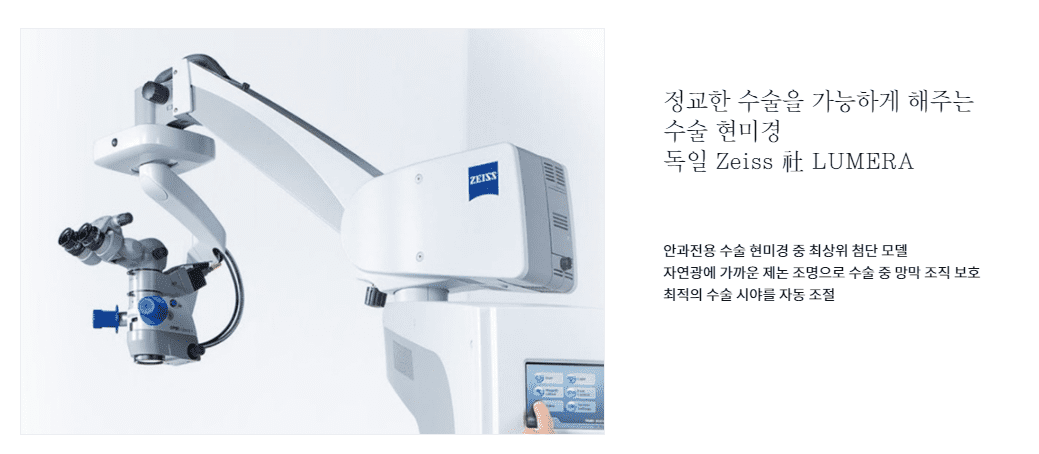
St. Mary's Ophthalmology Department is the first in the country to build a state-of-the-art presbyopia cataract surgery system in Germany. We operate with a combination of equipment, including a state-of-the-art, non-contact laser ophthalmoscope that measures the structure of the eye in less than 45 seconds, a three-dimensional corneal tomograph that allows us to see the shape of the cornea and the extent of cataract progression, and a dedicated ophthalmic surgical microscope that allows us to perform precise surgeries. In particular, we achieve ultra-precise astigmatism correction, minimal light bleeding, and the shortest surgery time - the three pillars of successful surgery.
St. Mary's Ophthalmology Department treats each patient as if he or she were a member of the family, and provides personalised care based on each patient's eye condition through one-on-one VIP consultations. In particular, we have a wealth of clinical experience, and in July, we were the first in Korea to achieve 1,000 successful surgeries for Alcon's Vivity lens implantation.
If you need cataract surgery, consult with our highly skilled and experienced eye care team to find the right intraocular lens for you.
See the state-of-the-art cataract surgery system at St Mary's Eye Centre
Phone number
02-577-7782⏰Operating hours
Mon - Fri / AM 09:00 ~ PM 18:00Saturday / AM 09:00 ~ PM 15:00
Lunch Break/PM 13:00 to PM 14:00
No Saturday lunch break