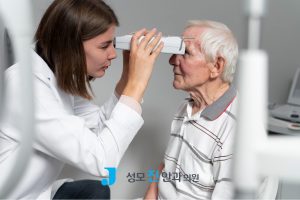

Have you ever seen a flash of light in your eyes, even though there was no light in them? This is called a Photopsia symptomsand can be a sign of a serious eye condition, rather than just a temporary blip. In particular, the Photopsia in your 20sis often not age-related, so it's important to identify and address the cause.
The treatment for photopsia depends on its cause, which can be caused by a variety of factors, including retinal detachment or migraines. Ignoring or treating symptoms can lead to vision loss, Photopsia self-testto check your status and take appropriate action.
Today, the Symptoms and causes of photopsia and how to treat itand more!
1. What is photopsia?

Source: Vision Centre
Photopsia is a condition in which the Despite the lack of light in the eyes Symptoms of seeing flashing lights or flashes of lightin the eye. It's often characterised by a brief flash of bright light, as if you've seen a camera flash, which can be caused by irritation to the retina or optic nerve. While photopsia can be a temporary condition, it can also be a sign of a serious eye condition, such as a retinal detachment, so it's important to self-examine and get checked to determine the cause of your photopsia and get the proper diagnosis and treatment.
1) Photopsia symptoms
Photopsia can manifest in many different ways, and the form and severity of symptoms can vary from person to person.
Symptoms of photopsia include.
(1) Flashing light
- Even in dark environments with no light, you can suddenly Bright flashesis visible.
- The flashes can feel intense, as if you've seen a camera flash, and they appear for a brief moment.
- It is often present even when the eyes are closed, and may be felt more strongly when moving.
(2) Shape of light
- The shape of the flashes can vary, appearing as lines, curves, or irregular shapes.
- In some cases, the flashing light may appear to spread out like a flame, or it may start at a single point and continue in a line.
(3) Occurrence location
- The flashes may be visible in only one eye, or they may appear in both eyes at the same time.
- The location of the flashes varies depending on the area of damage to the retina, and is typically located in the Edge of field of view (periphery)a lot.
(4) Duration
- Flashes of light appear in very short bursts, but can occur repeatedly over a period of time.
- It may appear a few times a day, or it may feel more frequent when you do certain activities (such as shaking your head or moving your eyes quickly).
- If it persists, it's likely related to another issue.
(5) Comorbidities
- In addition to flashes, you may also see floating dots, threads, or spiderwebs in front of your eyes. Floatersmay be accompanied by.
- You may also experience symptoms of vision loss, such as blurred vision or not being able to see certain parts of your vision.
- In rare cases, headaches (especially migraines) or dizziness may also occur.
If you experience any of these symptoms of photopsia, it's important to visit your eye doctor for an examination, rather than dismissing them as a temporary blip. The form and frequency of the symptoms can be important clues to diagnosing the cause.
2) Causes of photopsia

Source: Retina Associates Kansas City
Photopsia is a condition that occurs when there is a problem, usually with the retina or optic nerve, and can be caused by a variety of things. One common cause is Retinal detachment or retinal tearin the eye. If the retina detaches or tears away from the eyeball, you may see flashes of light, which can lead to vision loss and require immediate medical attention. In addition, as we age, the vitreous deforms or shrinks, pulling on the retina, causing the Posterior vitreous detachment Phenomena can also cause photopsia.
Trauma It is also an important cause. A strong blow to the head or eye can irritate the retina, causing flashes to appear temporarily. In addition to this, Migraines Patients often experience visual flashes before the headache, known as visual precursors, which often occur in conjunction with the headache.
Meanwhile, Problems with blood flowcan also cause photopsia when blood flow to the brain or eyes is temporarily reduced or blocked. This can be an early sign of a transient ischaemic attack (TIA) or other vascular disease. Also, Glaucoma, Uveitiscan also cause photopsia, so an accurate diagnosis is necessary if these conditions are suspected.
Why it's important to test for retinal detachment symptoms sooner rather than later - Shortcuts
2. photopsia self-test list

Source: Ophthalmology Breaking News
Flashes before your eyes can be a sign of a serious condition, not just fatigue. If you have recurring or accompanying symptoms, you should be concerned. Check your condition with the photopsia self-test list below, and see a doctor if necessary!
✅ Photopsia self-test list
- Can you see the flashing light in a dark environment?
- Are the flashes of light recurring frequently or worse in certain situations?
- Do you see inscriptions (dots, threads, cobwebs) with flashes?
- Do you feel like your vision is blurry or you can't see certain parts?
- Have you recently suffered a strong blow to the head or eyes?
- Did you experience any flashes or vision changes after the impact?
- Do flashes occur with headaches (especially migraines)?
- Do you have symptoms related to blood pressure changes or a family history of cerebrovascular disease?
- Have your flashes lasted more than a few days or are they getting worse?
- Are your symptoms recurring or increasing in intensity?
3. resolve photopsia
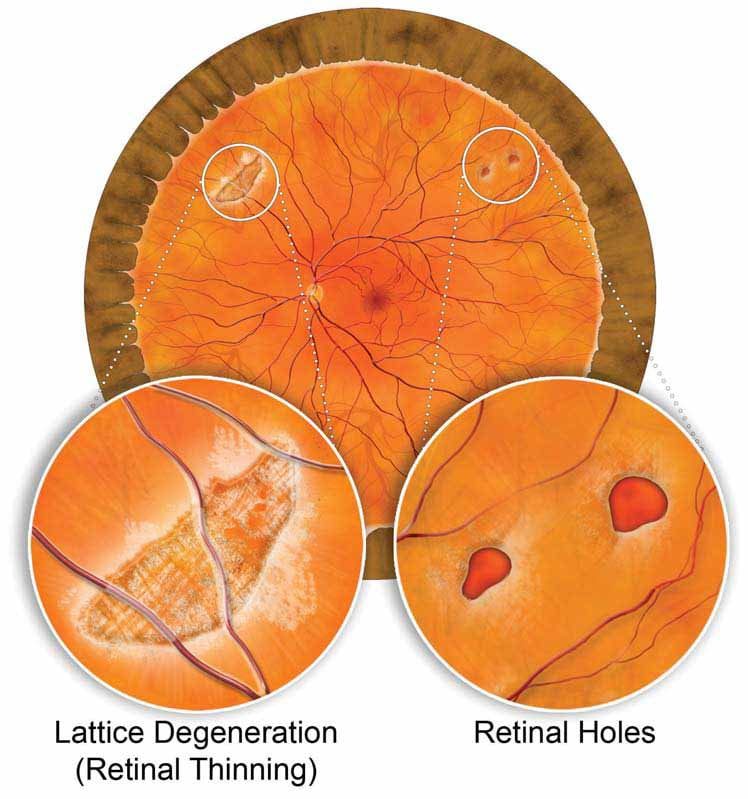
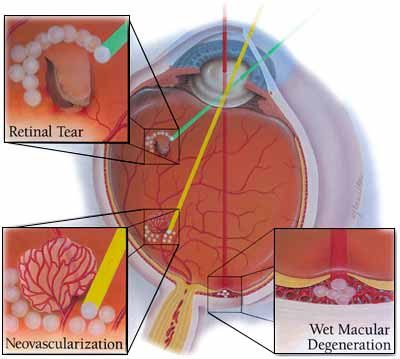
In order to resolve photopsia, it is important to first determine the exact cause of photopsia. If you experience photopsia, you should see an eye care professional immediately for a diagnosis. If it's caused by a retinal detachment or retinal tear, you may need to see a Surgical treatments such as laser therapy or vitrectomymay be required, and this situation is considered an emergency to prevent vision loss. If the cause is a posterior vitreous detachment, observation is usually sufficient without treatment, but if the retina is affected, further action may be required.
Migraine-induced photopsia can be managed with preventative medication or painkillers.to resolve photopsia, and Make lifestyle changes to reduce stress and fatigueIf it is caused by a blood flow problem, symptoms can be relieved by controlling blood pressure or treating vascular disease, and it is important to improve your diet alongside this. If uveitis is caused by an inflammatory condition, it is treated with steroid eye drops or anti-inflammatory medication.
which can also be seen in younger people Photopsia in your 20sis often associated with stress, trauma, or migraines. In these cases, the Managing stress to reduce tension and getting plenty of rest is effective in reducing symptomsMaintaining a healthy diet, including avoiding harsh light to reduce eye strain and eating foods rich in antioxidants, is also essential to maintaining eye health.
If your photopsia suddenly worsens or is accompanied by symptoms that block part of your vision, it may be an emergency and you should seek medical attention without delay. It's important to self-diagnose your photopsia, have a thorough examination, and seek treatment to protect your vision and stay healthy, as photopsia is not just a symptom, but a sign of a serious eye condition that can cause vision loss.
4. Take care of your eyes - start at St Mary's Eye Clinic!
It's important to self-diagnose photopsia and take appropriate action, as it can be an early sign of a serious problem, such as retinal disease, rather than just fatigue. Early detection and management is important, especially in the 20s, as photopsia is often associated with stress, trauma, or genetics.
JIN EYE CENTER는 Specialised treatment and care tailored to your individual eye conditionand pursues the best outcomes through personalised care and individualised treatment plans rather than one-size-fits-all treatment. In particular, the Department of Ophthalmology at St. Mary's Hospital Seoul is staffed by the country's top-notch medical staff, comprised of outpatient faculty members from the Department of Retina. Utilising state-of-the-art medical equipment, we provide accurate diagnosis and efficient treatment, and through one-on-one personalised surgery optimised for each patient's eye characteristics, we provide high-quality care that is rarely found even in university hospitals.
In this article, we've covered a list of self-diagnosis, symptoms of photophobia, and how to deal with photophobia. Photophobia can be a sign of more than just fatigue, and it can also be caused by things like stress or trauma, especially in your 20s, so it's important to get it checked and managed early. Don't miss the smallest symptoms and protect your eye health with regular check-ups and proper lifestyle changes!
Get eye pressure treatment at St. Mary's Eye Institute - go to
☎️ Representative number
02-577-7782
⏰ Hours of operation
Mon - Fri / AM 09:00 ~ PM 18:00
Saturday / AM 09:00 ~ PM 15:00
Lunch Break/PM 13:00 to PM 14:00
No Saturday lunch break