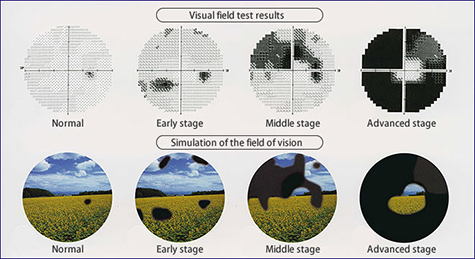
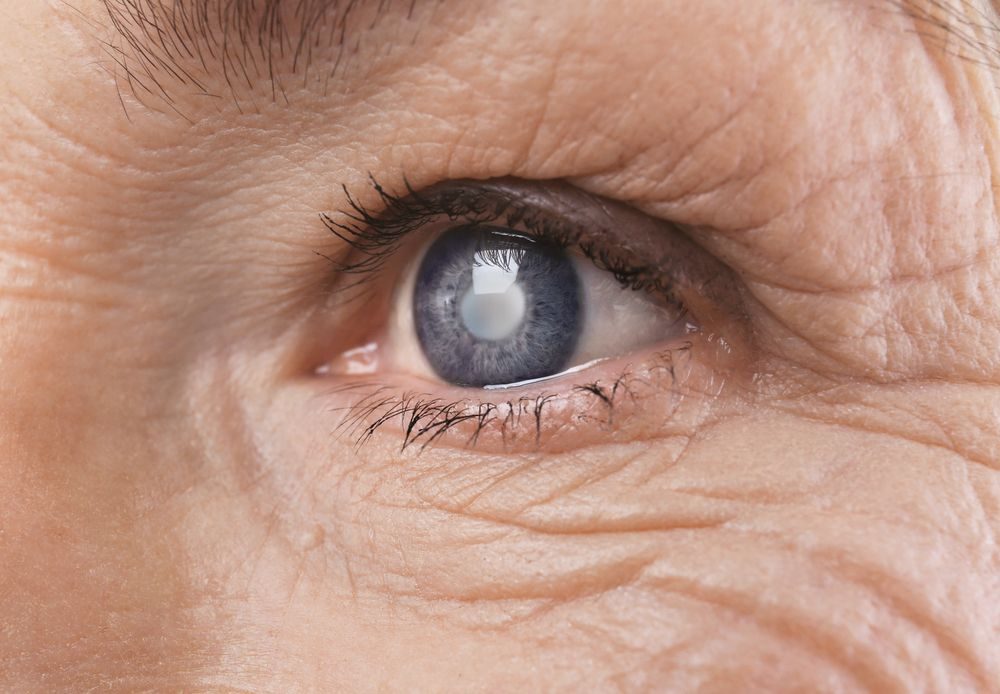
Glaucoma is a disease where damage to the optic nerve causes the visual field to gradually narrow, or in the worst cases, can lead to complete loss of vision.
It primarily occurs when increased intraocular pressure exerts pressure on the optic nerve, but some forms of glaucoma can develop even when intraocular pressure is normal.
The optic nerve transmits visual information from the eye to the brain, and damage to this area can severely impact vision.
While there may be no noticeable symptoms initially, vision gradually narrows and can eventually lead to blindness,
making early detection and treatment crucial.
Glaucoma is one of the leading causes of blindness worldwide, particularly common among the elderly.
The risk of developing glaucoma increases after age 40, and risk factors include high blood pressure, diabetes, and family history.
Types of Glaucoma
Open-angle glaucoma
The most common form involves a gradual blockage of the eye's drainage system, leading to increased intraocular pressure.
Because symptoms are minimal in the early stages, regular checkups are essential for early detection.
Closed-angle glaucoma
This condition involves a sudden blockage of the eye's drainage system, causing a rapid increase in intraocular pressure.
In such cases, it may be accompanied by sudden vision loss and severe eye pain,
requiring emergency treatment.
Symptoms of Glaucoma
Glaucoma often has few symptoms in its early stages, making it difficult to detect, but as it progresses to the advanced stage, changes in vision may occur.
If you experience any of the following symptoms, it is important to get an eye exam immediately.
Eye pain or headache
Severe pain in the eyes or head may accompany it.
Peripheral vision begins to narrow
The peripheral vision gradually narrows,
while the central vision remains relatively preserved until the end.
Sudden vision loss
In acute angle-closure glaucoma, intraocular pressure rises rapidly,
which can cause sudden vision loss.
Causes of Glaucoma
Increased intraocular pressure
The primary cause is an increase in intraocular pressure. When intraocular pressure rises, damage to the optic nerve begins.
Genetic factors
Having a family member with glaucoma increases your risk of developing the condition. Regular checkups are especially important if you have a direct family member with a history of the disease.
Hypertension and diabetes
Failure to properly manage blood pressure and blood sugar levels may increase the risk of developing glaucoma.
Old age
The risk of developing glaucoma increases with age,
and regular checkups are essential for those in their 40s and older.
Other conditions
Cardiovascular disease and obesity can also influence the onset of glaucoma.
Glaucoma Diagnosis/Examination
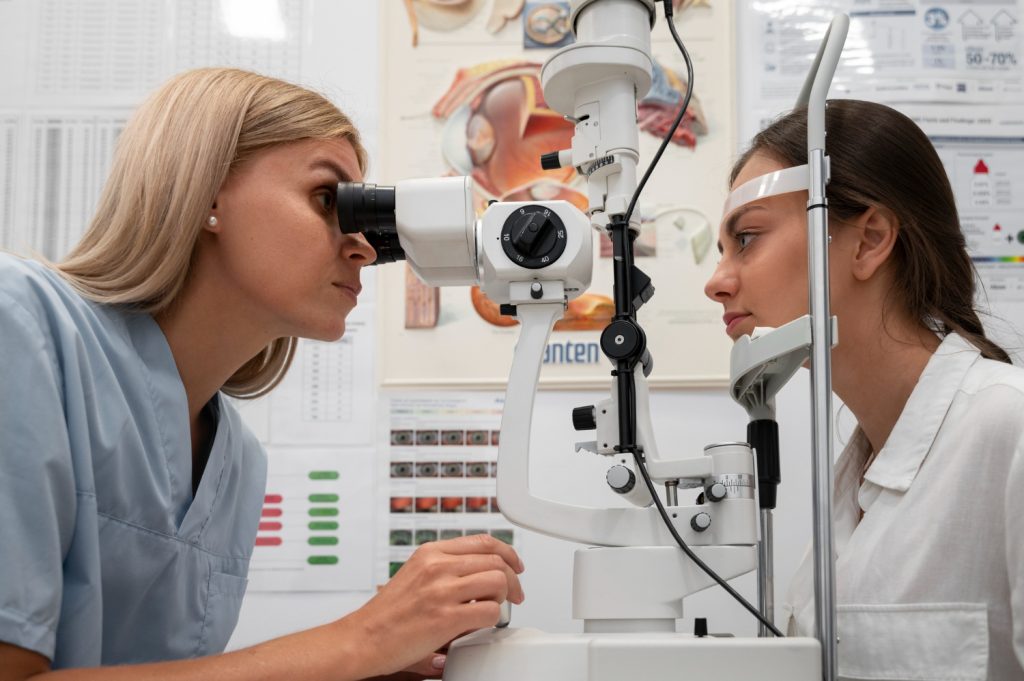
Intraocular pressure measurement
We measure the pressure inside the eye to check for high
intraocular pressure.
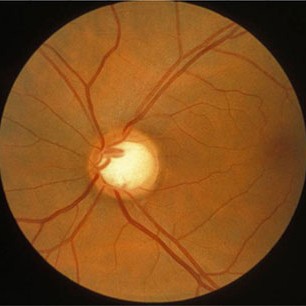
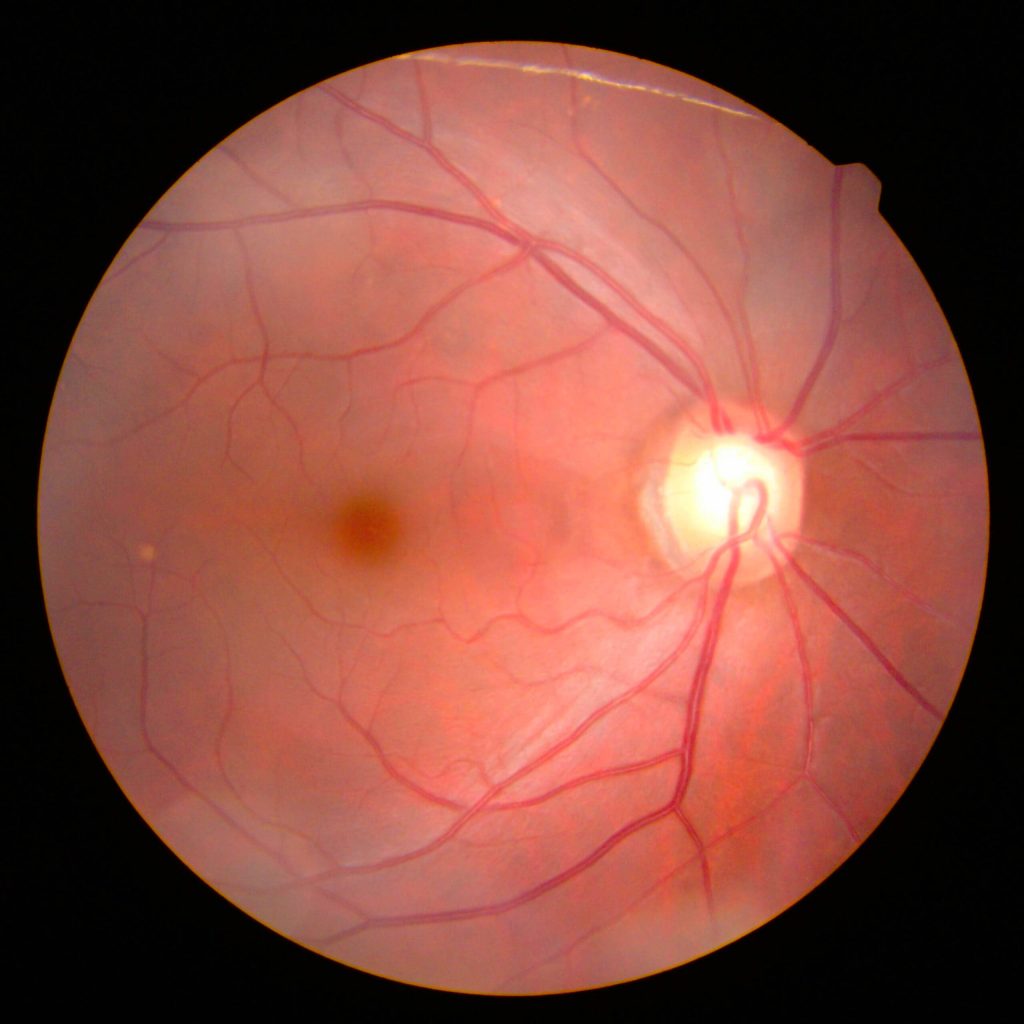
Fundus photography
After dilating the pupils, the condition of the optic nerve is examined to determine if there is any damage.
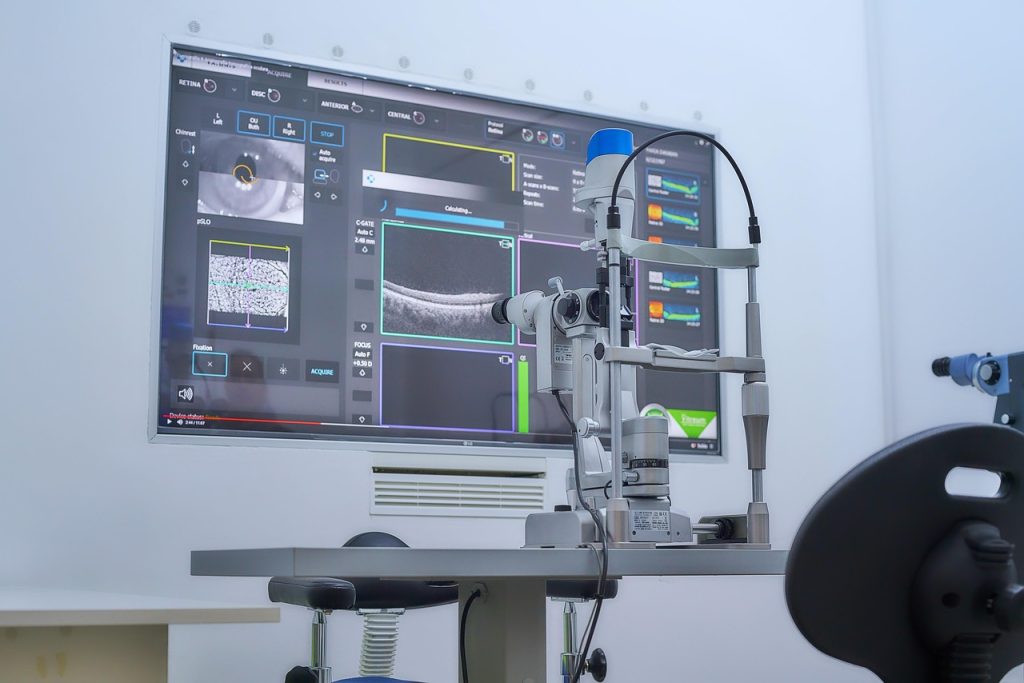
Optical Coherence Tomography (OCT)
Cross-sectional imaging of the optic nerve is used to measure
the thickness of the nerve fiber layer and assess for damage.
Glaucoma Treatment
Use of intraocular pressure-lowering medications
Laser surgery
Surgical procedures such as
trabeculectomy or
glaucoma implant insertion
Taking medications known to have
neuroprotective effects
Glaucoma Prevention Guidelines
No Smoking
Smoking can increase the risk of glaucoma, so quitting smoking is important.
UV protection
Ultraviolet rays can damage your eyes, so wear sunglasses when going outside to protect them.
Healthy lifestyle habits
Manage your blood pressure and blood sugar through healthy eating habits and regular exercise.
Regular checkup
If you are in your 40s or older, it is important to have an eye exam at least once a year.
If you have a family history of eye conditions, it is recommended to start having exams in your 30s.
FAQ
Q. Can glaucoma be cured?
Glaucoma is currently an incurable disease. However, with appropriate treatment and management, symptoms can be slowed or progression halted.
Medications to control intraocular pressure or surgery may be necessary.
Q. What happens if glaucoma progresses?
As glaucoma progresses, the visual field gradually narrows, and in the worst cases, it can lead to blindness.
Because there are no noticeable symptoms in the early stages, it is important to detect it early through regular checkups.
Q. What precautions should I take in daily life if I have glaucoma?
It is important to avoid excessive stress, high blood pressure, and high blood sugar in daily life, and to maintain regular exercise and healthy eating habits.
Additionally, you should have regular eye exams to check your intraocular pressure and continue treatment as prescribed by your doctor.
Q. Can glaucoma occur acutely?
In cases of angle-closure glaucoma, a sudden increase in intraocular pressure can cause abrupt vision loss and severe eye pain.
Immediate emergency treatment is required in such cases.
Learn more
Latest Information on Glaucoma
Check out the blog below for more information about glaucoma.
 English (UK)