
If your vision isn't what it used to be, and you're experiencing blurry or double vision, glare during the day and light flashes at night, you may have cataracts. It's easy to dismiss cataracts as a normal part of aging, but they can progressively reduce your vision and cause significant disruption to your daily life.
Cataracts can be slowed down with medication, but surgery is required to cure them, especially with the newer cataract lenses that don't just remove the cloudy lens, but also correct vision.
Today, the Types of lenses used in cataract surgery and features of the newest cataract intraocular lens, the Odyssey LensLet's take a look at.
1. common cataract symptoms and treatments
1) Symptoms

Source: Dr.Now
Cataracts are caused by a variety of factors, including aging, trauma, and systemic diseases, and can be very disruptive to daily life if not detected early. Common symptoms include Unexplained eye pain, headache, or redness and more, Blurred vision or loss of clarityIt is also accompanied by Night blindness, a rapid decrease in vision in low light; double vision, where objects appear to overlap; and severe glare and light spillage throughout the day and night. and more. These symptoms are important signs that you should suspect cataract progression, not just poor vision.
2) Remedies

Source: Seoul Asan Medical Center
Early-stage cataracts can be slowed down with medication, but this cannot fundamentally restore vision, and surgery is currently the only definitive treatment. The clouded lens is removed and a new lens, called an intraocular lens, is inserted in its place.in the following table. In recent years, there has been a trend towards personalising treatment by choosing multifocal IOLs instead of monovision, or using lenses with astigmatism correction if the patient has astigmatism. The latest cataract lenses, which combine the advantages of monofocal and multifocal lenses, are particularly popular for personalising treatment, as they offer a wider field of vision and clearer vision.
✅How Much Does Cataract Surgery Cost? 2 Lens Differences
2. cataract lenses, how do you choose?
The quality and range of vision after cataract surgery depends largely on which lens is inserted. There are two main types of lenses used in surgery: monofocal and multifocal intraocular lenses.
A monofocal lens focuses only on either near or farlenses that are made to fit your eyes. You usually focus on the distance and then wear glasses to see up close. A multifocal lens is a lens that can focus on both far and near objects.which helps you see things clearly from any distance after surgery. However, because there are two focal points, you may experience some light smearing or image degradation.
1) 2 types of multifocal lenses

Source: JIN EYE CENTER
- Diffractive lenses
Diffractive lenses are Split light into multiple foci for both far and near visionThis is the way it can be done. Stable vision can be restored, but some patients may experience glare or light flashes.
- Articulated lenses
An articulated lens is a How to use the refractive structure of a lens to achieve multifocal capabilitiesand the quality of vision can vary depending on your pupil size and eye condition. They may also have less light smearing than diffractive lenses, but it's important to know your eye condition before choosing a lens, as there are many individual differences.
2) How to choose a cataract lens
The choice of cataract lens should be based not only on vision correction, but also on the patient's lifestyle and occupation, pupil size, and the presence of astigmatism. For example, if you are an office worker who uses a computer a lot, you may need a lens that provides good mid-range vision, and if you have astigmatism, a lens that includes a feature that corrects astigmatism along with the cataract is suitable. Therefore, it is recommended that you consult with your surgeon before surgery to choose the best lens for you.
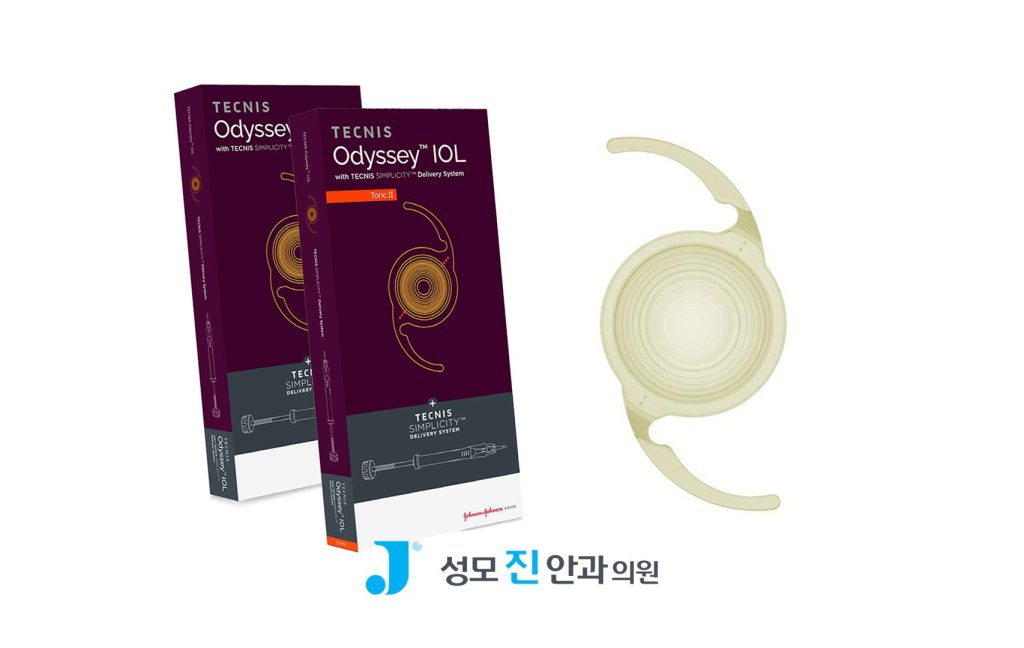
3. the latest multifocal intraocular lens, Odyssey Lens
1) What is Odyssey Lens?

Source: YOUTUBE
These lenses are the latest generation of multifocal intraocular lenses, representing the next generation of technology in surgically implanted lenses. Patients are highly satisfied with this lens because it improves on the limitations of conventional multifocal lenses while providing the stability of monofocals and the convenience of multifocals. It is an option that can further enhance post-operative satisfaction when selected based on the patient's lifestyle and eye condition.
2) Pros

Source: YOUTUBE
- Improve the shortcomings of traditional multifocal lenses
The original multifocal lens had a Minimise issues such as light spill, glare and contrast desensitisation at nightto reduce the inconvenience of everyday life.
- Apply continuous focus (EDOF) technology
Combining the clarity of a single vision lens with the convenience of a multifocal lens, they provide smooth, natural vision at close, medium, and far distances.
- Improved tolerance
The ability to compensate for some post-operative refractive error is excellent, so a wide range of patients can expect stable vision correction.
- Astigmatism correction
The Toric model can even correct astigmatism, so you can have clear vision even if you have astigmatism.
✅Johnson & Johnson Odyssey! Review of the first release in Korea [Dr. Jin Hyung Park, MD]
4. Want more sophisticated cataract surgery? At St Mary's Eye Centre!

Source: YOUTUBE
At the heart of cataract treatment is a sophisticated cataract surgery technique that involves selecting the right cataract lens for the patient's eye condition and inserting it securely. There are many options available, including monofocal, multifocal and astigmatic lenses, so accurate judgement by an experienced specialist is essential.
St. Mary's Ophthalmology Department is the first in Korea to integrate the cataract and presbyopia surgery system from Zeiss, Germany, which allows us to consider refractive errors and lens selection issues in detail. The surgery is performed by outpatient faculty members from the Department of Retina at St. Mary's Hospital, Catholic University of Korea, and is safe and fast with a minimally invasive, painless, and bloodless system. In addition, we comprehensively analyse the patient's vision needs, lifestyle, and eye anatomy to suggest the most suitable lenses. We also utilise toric models and advanced options that can correct even the slightest astigmatism to enhance post-operative vision satisfaction.
If you're looking to restore clearer, more comfortable vision, we have the clinical experience and state-of-the-art surgical equipment to make a difference. With our skilled medical team, you can restore clear, bright vision.
Schedule a checkup and consultation today to find out which solution is right for you.
Get a cataract consultation at St Mary's Eye Centre
☎️ Representative number
02-577-7782⏰ Hours of operation
Mon - Fri / AM 09:00 ~ PM 18:00
Saturday / AM 09:00 ~ PM 15:00
Lunch Break / 13:00 PM to 14:00 PM
No Saturday lunch break