Presbyopia is a natural aging phenomenon that occurs as the elasticity of the eye's lens decreases with age, making it difficult to see close distances clearly.
It typically begins around the age of 40 and can occur in anyone.
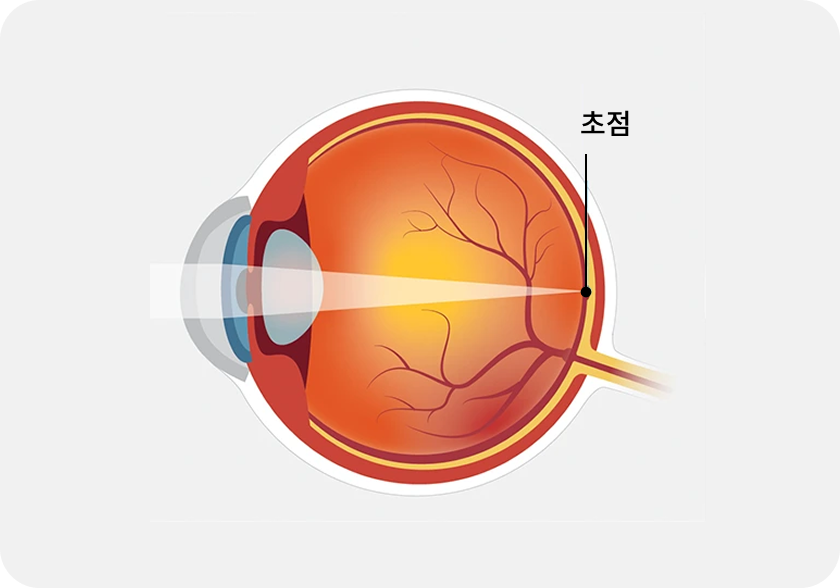
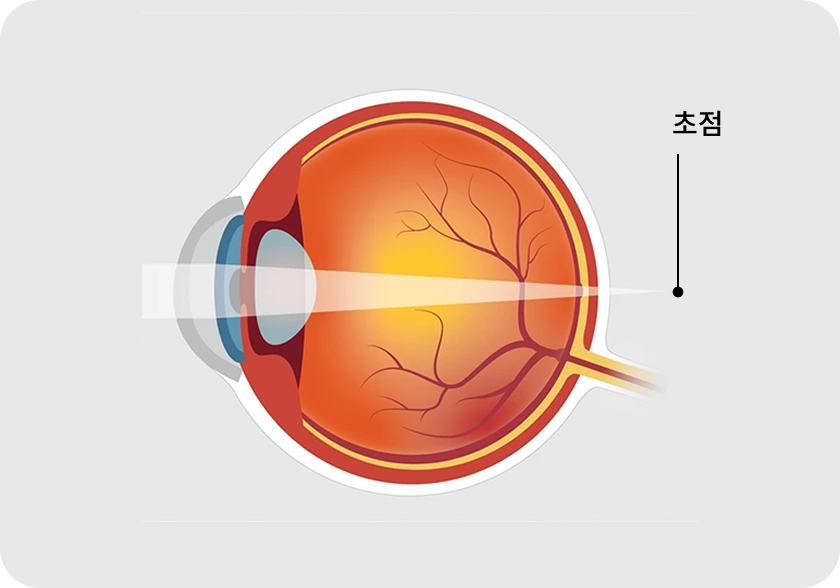
Normal focus position
Presbyopia Focus Position
The primary symptoms of presbyopia
The text on my phone is hard to see.
My eyes feel gritty and heavy.
I'm wearing reading glassesbecause the text is hard to see.
Vision deterioratesin dark places.
Reading gives me a headache.
What is a cataract?
Cataracts are a condition where the lens inside the eye, which functions like a camera lens, becomes cloudy, causing blurred vision.
A normal lens is transparent, accurately transmitting light to the retina. However, when cataracts develop, the lens becomes cloudy, causing vision to appear hazy like looking through fog and making light appear blurred.
Normal lens
Cataract lens
Common symptoms of cataracts
Objects appear to overlap.
Even with the magnifying glass, it's not clear.
Distinguishing colorsbecomes difficult.
The light appears to be spreading.
Glareoccurs.
Types of Cataracts
Age-related cataract
Congenital cataract
Secondary cataract
Traumatic cataract
Diabetic cataract
Drug-induced cataract
Causes of Cataracts
Age
It is the most common cause of cataracts.
As we age, the lens gradually hardens and becomes cloudy, leading to the development of cataracts.
Genetics
If someone in your family has cataracts,
your chances of developing cataracts may be higher due to genetics.
Diabetes
People with diabetes have a higher risk of developing cataracts.
High blood sugar can affect the proteins in the lens, leading to cataracts.
Trauma
After an eye injury or trauma,
if the lens is damaged,
cataracts may develop.
medication
Steroid medications are a common type of drug that can cause cataracts.
UV exposure
Excessive exposure to ultraviolet rays
can damage the cells in the lens
and lead to cataracts.
Cataract Treatment
Initial treatment
Follow-up observation and medication
In the early stages of cataracts, if vision loss is not significant
and daily life is minimally affected, regular monitoring
and slowing the progression with eye drops can be sufficient management.
However, eye drops alone cannot restore clarity
to a clouded lens.
Fundamental treatment
Cataract surgery
The fundamental treatment for cataracts is surgery.
After removing the cloudy lens,
an intraocular lens (IOL) is inserted in its place
To date, there is no medication that can restore clarity to a clouded lens.
Eye drops (such as those for cataract prevention) may help slow progression, but they cannot completely reverse an advanced cataract.
Surgery is the only fundamental treatment.
Q. Can cataracts develop again after surgery?
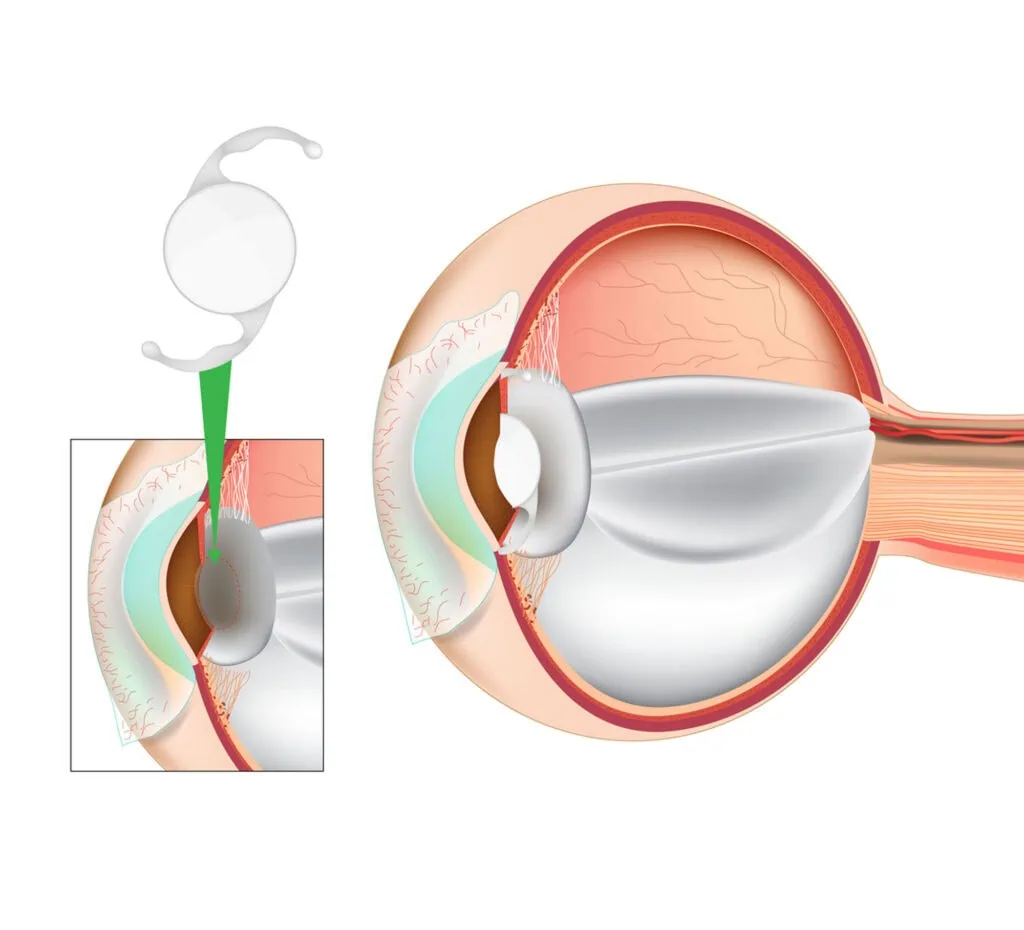
The removed lens itself will not develop cataracts again, but a condition called a secondary cataract may occur after surgery.
This involves clouding of the thin membrane (posterior capsule) that holds the artificial lens in place, which can be relatively easily improved with laser treatment.
Q. How are cataracts diagnosed?
The degree of lens opacity is directly assessed through microscopic examination.
Vision tests, intraocular pressure measurements, and retinal examinations are also performed to evaluate the overall condition of the eye.
Q. Can cataracts be prevented?
While it is difficult to completely prevent cataracts caused by aging, wearing UV-blocking sunglasses, quitting smoking, managing diabetes, and consuming foods rich in antioxidants can help slow their progression.
Early detection through regular eye exams is crucial.
Q. When should I have cataract surgery?
Surgery is considered when vision deteriorates to the point of causing significant inconvenience in daily life.
Surgery may be scheduled earlier if difficulties arise with activities such as driving, reading, or watching TV, or if a profession requires precise visual acuity.
Learn more
Latest Information on Cataracts at Jin Eye Center
Check out the blog below for more information about cataracts.







 English (UK)